ABOUT
About this spot
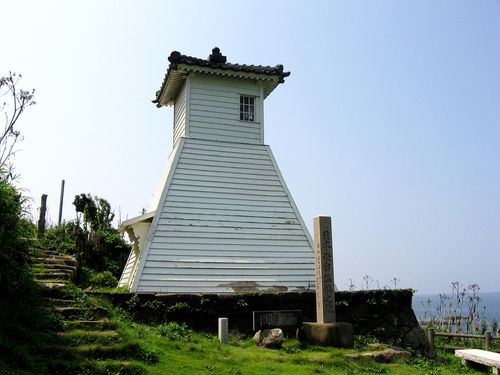
Rokkosaki Lighthouse is a white stone lighthouse standing at the very tip of the Noto Peninsula, in the Noroshi district of Suzu City, Ishikawa Prefecture. It is a navigation aid managed by the Japan Coast Guard (Ninth Regional Coast Guard Headquarters), and from a plateau on a cape jutting into the Sea of Japan it lights the waters offshore. Its position at the end of the Noto Peninsula is itself one of its great features.
It first lit its lamp on July 10, 1883. It is regarded as the first full-scale Western-style lighthouse built under the leadership of Japanese engineers. The tower is a round stone structure 12 meters high, with the light 48 meters above sea level. The stone was brought by boat from Anamizu, and hauling it up from below the cliff to the top of the cape by hand along a ropeway made for a difficult construction job. It is a lighthouse that carries the labor of lifting heavy stone by hand in its very tower.
The way the light works is also distinctive. Its light reaches 18 nautical miles (about 33 km), and it gives a light that shines for three seconds and goes dark for three seconds. Instead of rotating the lens as many lighthouses do, it kept the lens fixed and made the light blink by rotating a shielding plate in front of the lamp. It was electrified in 1940, and in 1963 it became unmanned through the automation of its equipment. It was selected as one of Japan's 50 Best Lighthouses in 1998 and certified as Modern Industrial Heritage in 2009.
In the Noto Peninsula earthquake of January 1, 2024, the lens and other parts of the lighthouse were damaged. The lamp was later replaced with an LED light source developed by the Japan Coast Guard, and the installation was completed in March 2025. The old lens itself was said to be difficult to repair or remake because the manufacturing technique has been lost. In 2026 the Council for Cultural Affairs recommended that it be designated an Important Cultural Property, and it was designated a national Important Cultural Property. It is a lighthouse born in the Meiji era that keeps working after surviving the earthquake.
Nearby stands a monument marking the tip of the Noto Peninsula, and from around the lighthouse you can look down on Senjojiki. The place name Noroshi is also the name of the town where the lighthouse stands. Before going, it is reassuring to check the latest situation of the lighthouse and its surroundings through guidance from Suzu City or others.
Sources
This article was written from the official, municipal and tourism-association sources above, and checked against them separately from the writing. Editorial policy
Last updated November 12, 2026