ABOUT
About this spot
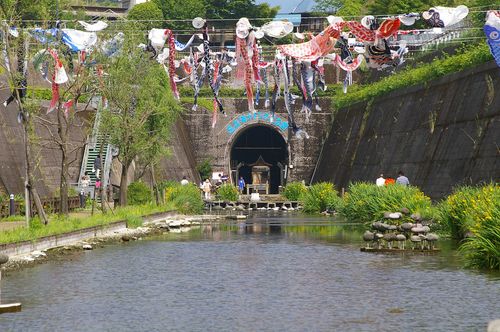
Tsujun Bridge is a single-arch stone aqueduct in Yamato, Kumamoto Prefecture. Completed in 1854, at the end of the Edo period, it is about 78 meters long and over 20 meters high. Three stone pipes run along its top, carrying water from the Tsujun irrigation channel to the plateau on the other side. It is known as one of the largest stone arch aqueducts of the early modern era and still waters the rice fields of the Shiraito Plateau.
The Shiraito Plateau is covered with volcanic ash soil, so rain soaks quickly underground and the area long suffered from water shortages. To solve this, the local headman Futa Hoyunosuke drew up the plan, with the help of the Taneyama stonemason group. Construction began in December 1852 and took about one year and eight months. Water is drawn from the upper Sasahara River about 6 kilometers away, and its completion opened up about 100 hectares of new rice paddies.
The bridge uses the principle of an inverted siphon, pushing water from a low point up to the higher plateau, with the joints of the stone pipes sealed with a special plaster. Discharge outlets on both sides of the center of the bridge release water to flush out mud and sand that collects in the pipes. It is known as a stone arch bridge that can discharge water this way, and in the off-season for farming the discharge has been shown to visitors. Whether it takes place, and whether the bridge top is open, can change, so check the official website before visiting.
The bridge was designated an Important Cultural Property in 1960 and, on September 25, 2023, became the first civil engineering structure, such as a bridge, in Japan to be designated a National Treasure. The 2016 Kumamoto earthquake caused cracks and leaks, and heavy rain in May 2018 collapsed part of the stone wall, but after repairs it reopened to the public on July 21, 2020.
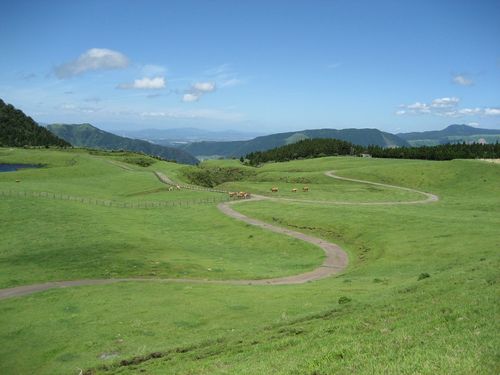
In front of the bridge is the shop Tsujun-kyo Mieru Terrace. About 200 meters downstream is the 50-meter Goroga Falls, and nearby Futa Shrine enshrines Futa Hoyunosuke. The terraced fields of the Shiraito Plateau change with the seasons and are worth a walk. Plan roughly one to two hours for the bridge and surroundings.
Sources
This article was written from the official, municipal and tourism-association sources above, and checked against them separately from the writing. Editorial policy
Last updated November 12, 2026