ABOUT
About this spot
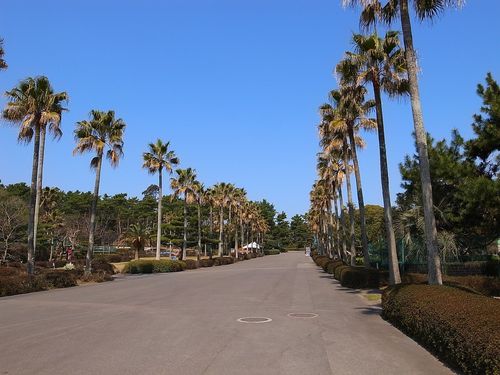
Heiwadai Park lies on hilly ground in Shimokitakata, Miyazaki City, and is a large park managed together with the prefectural comprehensive cultural park. It sits about 60 meters above sea level on a hill known as Hakkodai, about two kilometers north of Miyazaki Shrine, and you tour it on foot along lawns, around a pond and along ridge-top paths.
The symbol of the park is the Tower of Peace, 36.4 meters tall. Its original name was Hakko no Motohashira. It was planned as a commemoration of the 2600th anniversary of the imperial calendar and designed by the sculptor Hinako Jitsuzo. Construction began in 1939 and finished in November 1940. The front bears the characters Hakko Ichiu in the calligraphy of Prince Chichibu Yasuhito, and four Shigaraki-ware statues of the four spirits stand on its sides. Inside are eight reliefs, but they are generally closed to the public to prevent deterioration.
The tower has a history shaped by its times. In 1946, on GHQ orders, the Hakko Ichiu inscription and the Aramitama statue were removed and the tower was renamed the Tower of Peace. The statue and characters were restored in 1962 and 1965. In the 1964 Tokyo Olympics it served as the second starting point of the torch relay. About 1,789 cut stones were used for its foundation. Because prewar history is deeply bound up with how it was built, visitors are encouraged to learn that history and stand before the tower as a place to think about peace.
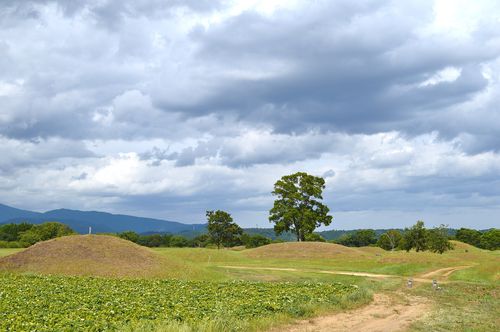
In the park's Haniwa Garden stand about 400 replicas of haniwa clay figures. The Shimokitakata burial mounds are also included in the park, so you can walk through a landscape that overlaps with ancient times. On the second floor of the rest house is a temporary exhibition room for the Haniwa Hall, and haniwa-making activities are also announced. For exercise there are athletic facilities, an exercise field, an artificial-turf ski slope and baseball fields, while the flower beds in front of the rest house and the tower are replanted with the seasons.
The park was once also considered as a site for a television transmitter. The story goes that because its elevation is low, about one hundred relay stations would have been needed to cover a wide area, so the broadcasters chose another mountain. It is a park that works both as a place to learn history and as a place for families to be active.
Sources
This article was written from the official, municipal and tourism-association sources above, and checked against them separately from the writing. Editorial policy
Last updated October 29, 2026