ABOUT
About this spot
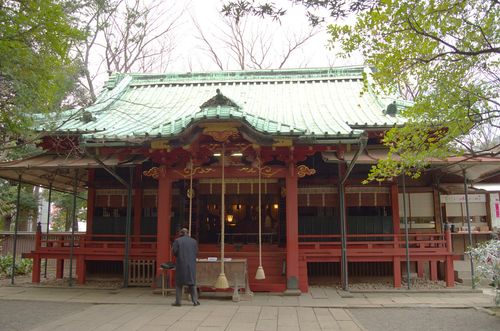
Shiba Daijingu is a shrine in Shiba-Daimon, Minato Ward, Tokyo. Said to have been founded in 1005, it enshrines Amaterasu Omikami and Toyouke Omikami, the deities of the Inner and Outer Shrines of Ise, and has long been known as the "Ise Shrine of the Kanto region." Minamoto no Yoritomo and Tokugawa Ieyasu are also enshrined in the auxiliary hall. It is a former prefectural-rank shrine, one of the Ten Shrines of Tokyo, and its main hall is in the shinmei-zukuri style.
Its origin is said to be a Shinmei shrine founded at Iikura-no-mikuriya, first standing on Mount Iikura, today's Shiba Park. Yoritomo donated shrine lands, and Ota Dokan revered it in the Warring States period. Ieyasu visited when he entered Edo, and in 1598 the shrine is said to have moved to its present site along with the relocation of Zojo-ji Temple. Standing on the Tokaido road next to Zojo-ji, it drew many worshippers, with teahouses and street shows lining the approach, and a local sweet called "Dai-dai mochi" was a famous souvenir. The shrine's name changed over time, from Hibiya Shinmei and Iikura Shinmei to Shiba Shinmei, and it has been called Shiba Daijingu since 1872.
The grounds burned down many times in great fires of Edo, the Great Kanto Earthquake and the Tokyo air raids, but were rebuilt each time. In 2005 the shrine celebrated one thousand years since its founding.
Every September a grand festival is held. The festival, which lasts more than ten days with events including mikoshi processions, is called the "Dara-dara Festival" and is sometimes introduced as the longest festival in Japan. Ginger is handed out during the festival, so it is also called the Ginger Festival, and it appears in Utagawa Hiroshige's woodblock print "Ginger Market." The amulet-like item "chigi-bako" is an oval bentwood box made of thin wood strips; because "chigi" sounds like "thousand garments," it is given as a gift for celebrations.
The shrine is also linked to the "Me-gumi Brawl," known as a kabuki play. The fire bell rung in the 1805 incident is said to have returned to the shrine later, and the Me-gumi, the Edo fire brigade responsible for the parish area, visits every year at the Setsubun festival. In the precincts are the Savings Monument honoring Makino Mototaro, called the "King of Savings," with an inscription by Mushanokoji Saneatsu, and cultural properties associated with Minato Ward. Combined with a walk to Zojo-ji, it gives a feel of Edo's temple-town atmosphere. Festival schedules vary by year, so please check the official website before visiting.
Sources
This article was written from the official, municipal and tourism-association sources above, and checked against them separately from the writing. Editorial policy
Last updated November 12, 2026