ABOUT
About this spot
This temple stands quietly in the urban area of Yao, near Kintetsu Yao Station. Locally it is known as Yao Jizo, and it is also introduced as one of the three great Jizo of Japan. Its sect is the Nanzenji school of Rinzai Zen, and the main image is Jizo Bosatsu. This Jizo is said to have been made by Ono no Takamura in the Konin era (810-824).
The temple is said to have been founded by Gyoki in the Nara period and was first called Shindo-ji. It was burned in the wars of the Nanbokucho period, but was restored in 1385 by Fujiwara no Morotsugu, and the following year the Jizo image and the Amida hall were rebuilt. Records of the Agency for Cultural Affairs note that in the Edo period its restoration advanced as a temple under the patronage of Ishin Suden. It has the graves of retainers of the Todo clan who died in the Summer Siege of Osaka, and it had ties with the Todo clan of Tsu domain in Ise Province.
The temple's greatest distinction is its connection with Kawachi Ondo. The Nagashi-bushi Seicho Kawachi Ondo, handed down at Joko-ji, is regarded as the prototype of Kawachi Ondo and is marked by a slow, conversational melody. This ondo has been selected as one of the 100 Soundscapes of Japan. Beside the temple gate are leftover stones from Osaka Castle and a monument inscribed as the oldest birthplace of Kawachi Ondo, which tell of its origin to this day. It is a place where you can hear an older form of ondo, quite different from the lively music heard at Bon dances.
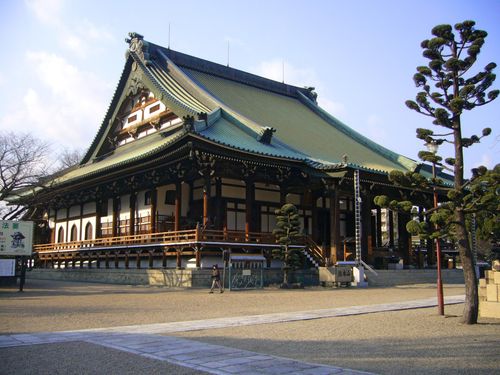
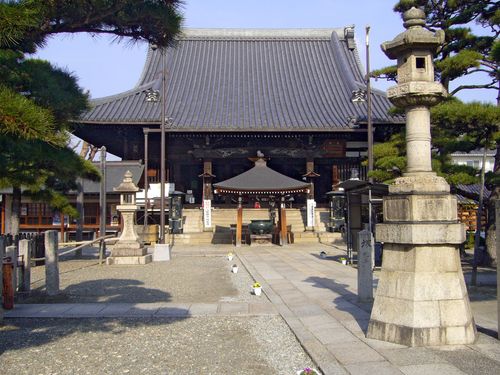
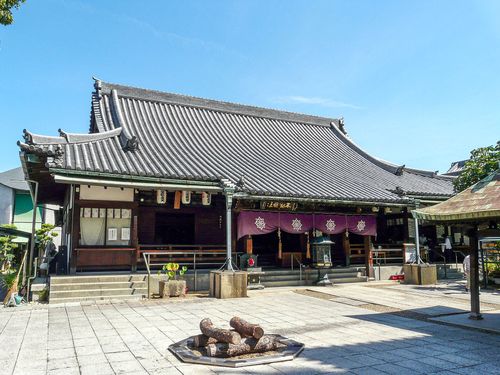
Among the buildings in the grounds, the main hall, the Amida hall and the Gyoja hall were designated tangible cultural properties of Yao City on March 3, 2014. The main hall is a late Edo-period irimoya-style building with a tile roof, the Amida hall is a late Edo-period hogyo-style building with a tile roof, and the Gyoja hall is a mid-Edo-period hogyo-style building with a tile roof. In an old temple surviving among a town of houses, you can see the long history of Yao town.
The annual events are also a highlight. The Daihannya-e is held every April, and the Jizo-bon ceremony takes place on August 23 and 24.
It is only about 10 minutes on foot from Kintetsu Yao Station, so it is easy to add to sightseeing in the Osaka area. The grounds are open to visit freely.
Sources
This article was written from the official, municipal and tourism-association sources above, and checked against them separately from the writing. Editorial policy
Last updated November 15, 2026