ABOUT
About this spot
In a corner of a residential neighborhood in Higashi-Mukojima, in Tokyo's old downtown, lies a small garden planted with flowers for every season. Mukojima-Hyakkaen began as a flower garden opened around 1804 (Bunka 1) by Sahara Kikuu, an antique dealer who ran a shop in Sumiyoshi-cho, Edo, with the help of literati. Writers, artists and townspeople gathered around Kikuu, and more than 360 varieties of plum are said to have been donated. The garden has been called "Hyakkaen" ("Garden of a Hundred Flowers") since 1809 (Bunka 6); the name is traditionally attributed to the painter Sakai Hoitsu, who chose it because plum trees bloom ahead of a hundred other flowers.
Hyakkaen grew into a garden that reflects the tastes of its literati patrons and prizes wild-style flowers. Its character is clearest in the seven autumn flowers (bush clover, Chinese bellflower, kudzu, pink, Japanese pampas grass, patrinia and thoroughwort), which are all planted here. About 29 stone monuments, including haiku and waka poem stones, are scattered through the grounds and recall the days when the garden was a salon for Edo-period writers.
The highlight is the Hagi Tunnel, at its best around late September. About 120 plants of Miyagi bush clover and white bush clover are trained over arched bamboo frames to form a tunnel roughly 30 m long, and walking under the cascading red-purple and white blossoms is an experience few other gardens offer. During the festival visitors can write haiku or waka about bush clover at the pavilion beside the wisteria trellis, and events such as tea ceremonies in the Onari Zashiki room and wild-plant walks with a guide are held. Plum blossoms brighten the garden in early spring, and other seasonal plants appear through the year.
Ogura Nobu donated it to Tokyo City in 1934, and it opened as a park on July 8, 1939. The air raids of March 1945 destroyed most of its buildings and plants, and it reopened in 1949. In 1978 it was designated a national Historic Site and Place of Scenic Beauty. The garden is regarded as the birthplace of the Sumida River Seven Lucky Gods pilgrimage and enshrines Fukurokuju, the deity its founder worshipped.
There is no parking; the garden is about an 8-minute walk from Higashi-Mukojima Station on the Tobu Skytree Line, or about 13 minutes from Keisei-Hikifune Station on the Keisei Oshiage Line, so it is best reached by train.
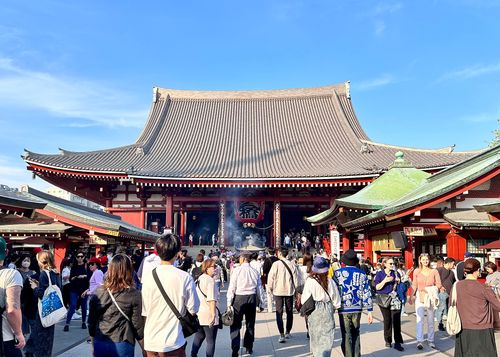
Nearby are Tokyo Skytree (about 1.6 km), Sumida Aquarium and Senso-ji Temple (about 2 km), making it easy to combine with a downtown stroll. It is a quiet place to enjoy the playful spirit of Edo-period literati between other sights.
Sources
This article was written from the official, municipal and tourism-association sources above, and checked against them separately from the writing. Editorial policy
Last updated November 16, 2026