ABOUT
About this spot
Kinosaki Onsen is a hot spring town in the Kinosaki district of Toyooka, Hyogo Prefecture. The Otani River runs from the station toward the public bathhouses, willows line its banks, and three-storey wooden inns stand shoulder to shoulder along the streets. The town is known for strolling in a yukata and geta sandals, and the local way to enjoy it is to treat the whole town as one large inn, moving between your inn's bath and the public baths. The water is a chloride (salt) spring, and source temperatures are said to vary from place to place.
There is a legend that the hot spring was discovered when a stork was seen healing its wounds in the water. It is also said that the monk Dochi Shonin prayed for a thousand days during the Yoro era, in the Nara period, and a sacred spring welled up. The tourist association dates the opening of the baths to about 1,300 years ago. In the Edo period the springs were called the best under heaven, and a stone monument to that title still stands. A story also survives that Kagawa Shutoku, a physician of Chinese-style medicine in the mid-Edo period, praised the water highly and renamed the new bath Ichinoyu. In 1925 the Kita-Tajima earthquake burned the town to the ground, and most of today's streetscape consists of buildings from the rebuilding period or their successors. The cityscape is protected by Toyooka's landscape ordinance.
There are seven public baths, and visiting them in turn, the Nanayu Meguri, is the town's signature pastime. Ichinoyu was praised as the best bath under heaven, and Gosho-no-yu is known for its open-air bath. Mandara-yu is named after the ascetic practice of Dochi Shonin, and Kono-yu is tied to the legend of the stork healing its wounds. The others are Sato-no-yu, Yanagi-yu and Jizo-yu. Baths of different character sit close together, so you can walk between them.
Kinosaki is also a literary town. Shiga Naoya stayed here to recover from an injury and wrote the short story At Kinosaki, and Arishima Takeo, Izumi Kyoka, Shimazaki Toson and Shiba Ryotaro also visited. The Kinosaki Literature Museum introduces this history, and there is a publishing label called Hon to Onsen whose books are sold only at local inns.
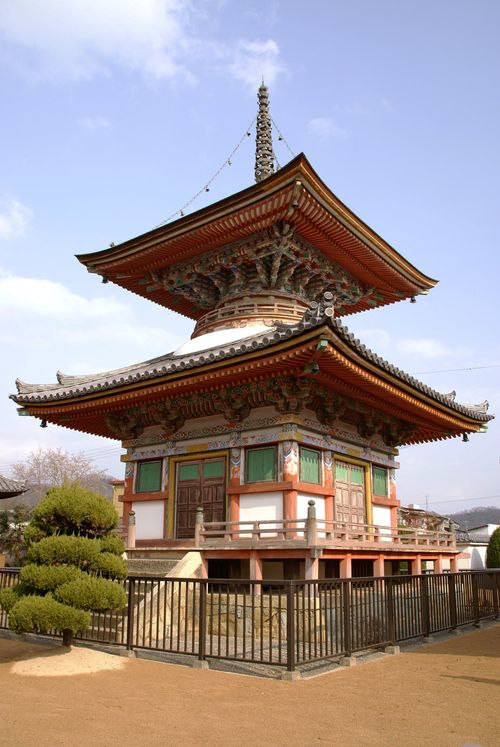
On the hillside behind the town stands Onsenji, regarded as the guardian temple of Kinosaki, and in autumn its pagoda surrounded by red leaves is a highlight. Each season has its own scenery, from night cherry blossoms along the Otani River in spring to rows of geta in the inns' shoe cabinets in winter. A ropeway and the Daishiyama hiking course are also available, but parts may be closed, so please check the tourist association's official site before you visit.
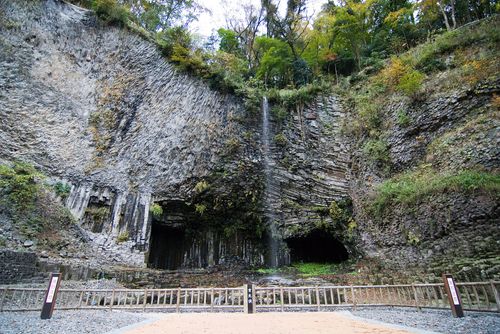
Nearby attractions include Genbudo, the Takeno coast and the Hyogo Prefectural Home for the Oriental White Stork. Winter is also the season for crab dishes, and many visitors combine them with the hot springs. Just walking from bath to bath can easily fill a day.
Sources
This article was written from the official, municipal and tourism-association sources above, and checked against them separately from the writing. Editorial policy
Last updated November 12, 2026