ABOUT
About this spot
Okinawa World, formally "Okinawa World: Culture Kingdom Gyokusendo," is a theme park in Tamagusuku, Nanjo City, Okinawa Prefecture. The Gyokusendo limestone cave, the Ryukyu Kingdom castle town of red-tiled old houses, and the Habu Museum Park share one site, and the official site presents it as a place to enjoy for a whole day. It is run by Nanto, a company that operates tourist facilities in Okinawa.
It began on April 28, 1972, when Gyokusendo opened as a tourist cave. "Gyokusendo Bunkamura," said to be Okinawa's first paid tourist facility, is what became Okinawa World. In April 1979 "Gyokusen Habu Park" opened, and it is now the Habu Museum Park. In July 1996 "Gyokusendo Okoku-mura" (Kingdom Village) opened.
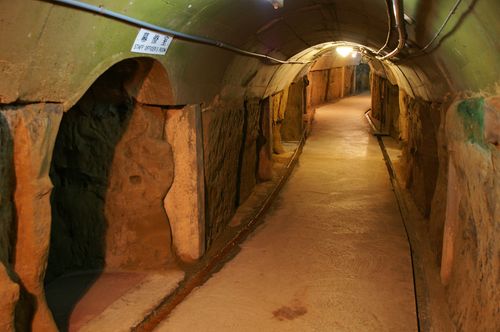
The star, Gyokusendo, in a broad sense means a cave group longer than 5,000 meters, and the section developed for visitors is about 800 meters long. The whole cave group consists of more than 31 caves, of which more than 15 lie within Okinawa World's grounds. In central and southern Okinawa Island, the Ryukyu Group of reef-derived limestone lies over the mudstone Shimajiri Group, and many caves formed in these strata. A stream runs about 30 meters underground, entering from the river known as the Yuhi River and joining the same river again. The caves are said to be home to the Okinawa little horseshoe bat, the giant mottled eel and the Kuroiwa's ground gecko.
The visitor path descends from 14.4 meters above sea level near the entrance to 4.7 meters near the exit. In September 1987 an in-cave escalator, said to be the world's first, was installed. The cave group was once called the "Gyokusendo Cave System," and after a 1971 survey report it also came to be known as the "Yuhi River Underground River Caves." The tunnel-like stairway at the former Nyudo-guchi entrance is used to store aged awamori (kuusu), taking advantage of the cave's stable temperature.
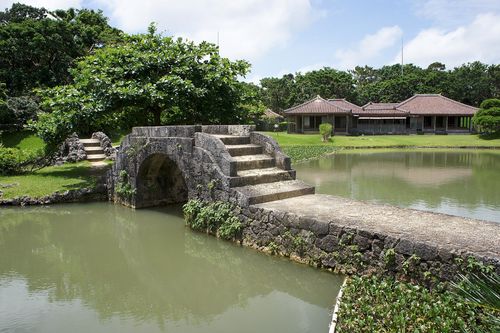
The Ryukyu Kingdom castle town is an area where red-tiled old houses stand in a row. The official site says visitors can try various crafts such as bingata dyeing and weaving. The Habu Museum Park deals with the venomous habu snake of Okinawa, and traces its roots to "Gyokusen Habu Park," which opened in 1979.
Experiences and opening conditions may change, so please check the official website before visiting.
Sources
This article was written from the official, municipal and tourism-association sources above, and checked against them separately from the writing. Editorial policy
Last updated November 12, 2026