ABOUT
About this spot
Sunpu Castle once stood in Aoi Ward, Shizuoka City, and its site is now Sunpu Castle Park. The Imagawa clan kept a residence in this area, which was lost in 1568 when Takeda Shingen invaded. From 1585 to 1586 Tokugawa Ieyasu moved here from Hamamatsu Castle and rebuilt it as an early modern castle.
After Ieyasu moved to the Kanto region in 1590, Nakamura Kazuuji became lord of the castle. After a great fire in 1607 burned the Honmaru Palace, Ieyasu began large-scale renovations, and the keep was completed in 1610. After stepping down as shogun and becoming "Ogosho," Ieyasu made this his residence and died here in 1616. The castle was a concentric-style flatland castle with three moats. A keep was built three times, but none survives.
In the later Edo period, it was badly damaged by earthquakes in 1707 and 1854 and repaired each time. In the Meiji era, Sunpu was renamed Shizuoka in 1869, and most of the buildings were torn down in 1871. In 1896 the inner moat was filled in to station an army regiment.
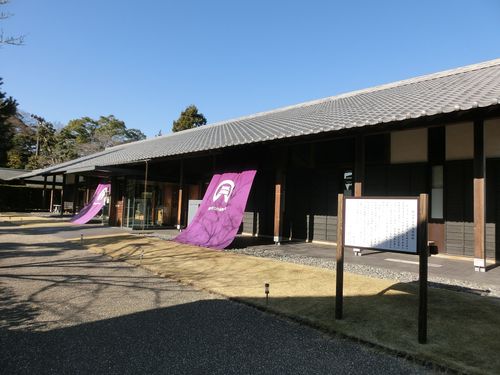
The present park has reconstructed buildings. The Tatsumi Turret was reconstructed at the southeast corner of the Ninomaru in 1989 and the East Gate in 1996, and the Hitsujisaru Turret was added at the southwest corner in 2014. The interiors of the Tatsumi Turret and East Gate are open as museums. Momijiyama Garden, developed in 2001, has a tea house. In the park are a statue of Tokugawa Ieyasu in falconry dress and a mandarin orange tree said to have been planted by Ieyasu.
A recent highlight is the excavation of the keep base, which began in 2016. Two keep bases from different eras, the Tensho and Keicho periods, were found overlapping, and gold-leaf roof tiles were also unearthed. Shizuoka City has kept the excavation site open as it is, so you can see the overlapping stone walls up close. The city is advancing an outdoor exhibition project for this keep base and has announced that construction will begin at the end of fiscal 2025.
The park covers about 18 hectares. It opened in 1949 as Chuo Park, was renamed Sunpu Park in 1951, and became Sunpu Castle Park on April 1, 2012. The area inside the former middle moat has been developed as an urban park. Part of the inner moat, filled in during the Meiji era, has been excavated and preserved. In 2006 the park was selected as one of Japan's 100 Historical Parks.
Sources
This article was written from the official, municipal and tourism-association sources above, and checked against them separately from the writing. Editorial policy
Last updated November 12, 2026