ABOUT
About this spot
Shinjuku Golden Gai is a district of bars and eateries in Kabukicho 1-chome, Shinjuku, Tokyo, across the street to the west of Hanazono Shrine. Small shops in wooden row houses fill a block of about 2,000 tsubo, crossed by narrow alleys such as G1 Street, G2 Street, Akarui Hanazono 1-bangai, 3-bangai, 5-bangai and 8-bangai, and Maneki Street. The "G" stands for Golden; originally only G1 and G2 Streets were called Golden Gai, but today the name refers to the whole block.
Its origins lie in the black market that appeared right after the end of the war. A Shinjuku drinking district made up mainly of stalls moved to this area, then part of Sanko-cho in Shinjuku Ward, after the General Headquarters of the Allied forces ordered the black markets to be abolished in 1949. After the Anti-Prostitution Act took effect in 1958, the area began its life as a drinking district, and the place name Sanko-cho disappeared when the new address system was introduced in 1978.
The bars are small, about 3 to 4.5 tsubo inside, and their defining feature is the closeness that lets the owner and customers talk to one another across the counter. A wide range of people, including writers, manga artists, painters, actors, film directors and journalists, have been regulars, and the district's name became known nationwide when two regulars, Nakagami Kenji and Saki Ryuzo, won the Akutagawa Prize and the Naoki Prize respectively for the second half of fiscal 1975. Film directors from abroad, such as Wim Wenders and Hou Hsiao-hsien, have also visited. In addition, people who once worked in the district's bars include the tanka poet Tawara Machi and the novelist Hase Seishu.
During the bubble economy of the late 1980s, the district faced aggressive land-buyout pressure, and bar owners formed the "Association to Protect Shinjuku Hanazono Golden Gai" to campaign against it. There was later a period when empty shops stood out, but with infrastructure improvements supported by the ward and new shops opened by young owners, the area regained its energy and remains today without having undergone large-scale redevelopment. According to the Shinjuku Sanko Shopping Street Promotion Association, about 290 shops line the alleys, and in recent years the district has also become popular with international visitors.
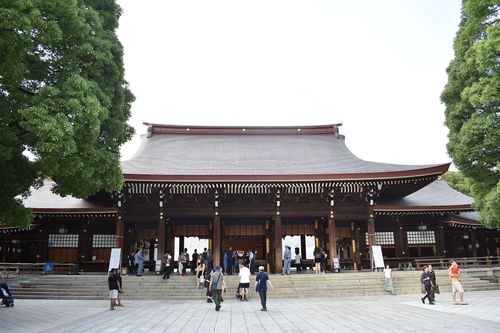
The block is managed by the Shinjuku Golden Gai Shopping Street Promotion Association and the Shinjuku Sanko Shopping Street Promotion Association. All the alleys are private roads, so permission must be obtained in advance to take photographs in the street. The whole block lies within the parish of Hanazono Shrine, and the many bars that enshrine shrine talismans and kumade rakes inside are a scene unique to this district next door to the shrine.
Sources
This article was written from the official, municipal and tourism-association sources above, and checked against them separately from the writing. Editorial policy
Last updated November 12, 2026