ABOUT
About this spot
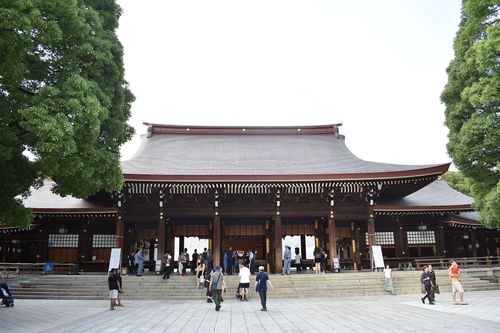
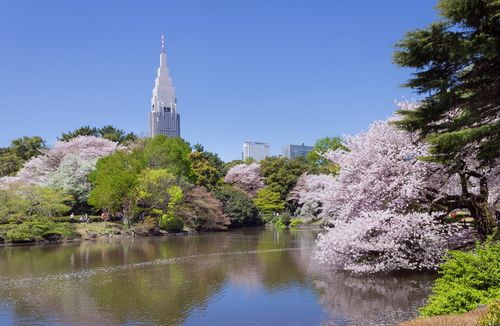
The observatories are on the 45th floor of the Tokyo Metropolitan Government Building's Main Building No. 1, 202 meters above the ground, and are divided into two: the South Observatory and the North Observatory. A direct elevator runs from the 1st floor and takes 55 seconds. According to the official guide, you can see Tokyo Skytree to the northeast; Shinjuku Gyoen and Meiji Jingu to the southeast; Shinjuku Park Tower, Tokyo Opera City and other buildings to the southwest; and Mount Fuji to the west. From December to February, when visibility is good, there are said to be many days when Mount Fuji can be seen.
The North Observatory has the cafe and shop 'CAFE&SHOP SOCOCOCO', and the South Observatory has the shop 'GIFT SHOP TOKYO Mikke!' and the 'Tocho Omoide Piano' (Metropolitan Government Memory Piano). The piano can be played only during set periods.
Main Building No. 1, which holds the observatories, is a skyscraper with 48 floors above ground, 3 below, and a height of 243.4 meters. When completed it overtook the Sunshine 60 to become the tallest building in Japan, and later gave that position to the Yokohama Landmark Tower. It was designed by Kenzo Tange, whose proposal was chosen in a designated design competition among nine companies in November 1985. To soften the oppressive look of a facade about 240 meters high and 110 meters wide, the top was made into twin towers shaped like an eight-pointed star, and as a result the proportions are said to resemble Notre-Dame Cathedral in Paris. Construction began in March 1988, was completed in December 1990, and operations started in April 1991. Besides Main Building No. 1, the complex consists of Main Building No. 2, with 34 floors above ground and a height of 163.3 meters, and the Metropolitan Assembly Building, with 7 floors above ground; it was divided into three buildings to meet the required floor area. The move to Shinjuku was announced in 1985. Tange also designed the former Marunouchi government building (the former first Tokyo Metropolitan Government Building), completed in February 1957. It is lit up at night and is also popular as a sightseeing spot.
The 43rd, 44th and 46th to 48th floors of Main Building No. 1 are machine rooms and are closed to the public. The observatories may close on inspection days of the building or in bad weather, and in some periods part of the lighting is turned off to save electricity. Closure information is announced on the official X account, so please check before you visit.
Sources
This article was written from the official, municipal and tourism-association sources above, and checked against them separately from the writing. Editorial policy
Last updated November 12, 2026