ABOUT
About this spot
Chihaya Castle is the site of a mountain castle in Chihayaakasaka Village, Osaka Prefecture, built by Kusunoki Masashige at the end of the Kamakura period. It is said to have been built in 1332 (the second year of Genko), and it stands at the tip of a spur of the Kongo mountain range. It is a National Historic Site and is also one of Japan's 100 Fine Castles (no. 55). Osaka Prefecture's materials count it as one of the seven Kusunoki castles and, together with the Shimo-Akasaka and Kami-Akasaka castle sites, as a historic site connected with the period from the raising of arms to the fall of the shogunate.
Behind the castle's construction lay Masashige's strategy. He scattered fortresses across the Mount Kongo area, made Chihaya Castle their overall command post, and faced the shogunate army with three castles: Shimo-Akasaka, Kami-Akasaka and Chihaya. Chihaya was built on the mountain behind Kami-Akasaka as its final stronghold. When Kami-Akasaka fell in February 1333 after its water supply was cut, its commander Kusunoki Masasue withdrew to Chihaya Castle.
The siege of Chihaya Castle that followed is described in detail in the Taiheiki. According to that work, the shogunate army came in great force while the defenders are said to have numbered fewer than a thousand. The garrison threw large stones down from the towers to fight back, and when the attackers cut the water source and switched to a long siege, the castle is said to have had stores of supplies. The Taiheiki also tells of a trick in which straw dummies were lined up, soldiers were hidden, and boulders were dropped on enemies lured out, and of the “long ladder stratagem,” in which a bridge laid for an assault was burned with oil and fire. The long ladder tale does not appear in other sources and its credibility is doubted, but a place name meaning “hanging bridge” survives in the valley on the castle's east side, so it is pointed out that it may really have been carried out. When Emperor Go-Daigo escaped from Oki and issued an imperial order to overthrow the shogunate, uprisings followed in many places, and the provincial governors who had surrounded Chihaya Castle returned home. Nitta Yoshisada attacked Kamakura soon after this battle ended, and the shogunate fell.
After the Kenmu Restoration, Chihaya Castle became the residence of the Kusunoki clan on the Southern Court side, and the lords continued with Kusunoki Masatsura, Masanori and Masakatsu. In the first month of 1392 (Meitoku 3), in the time of Masakatsu, it fell to an attack by Hatakeyama Mototsuni of the Northern Court side, ending a history of about 61 years.
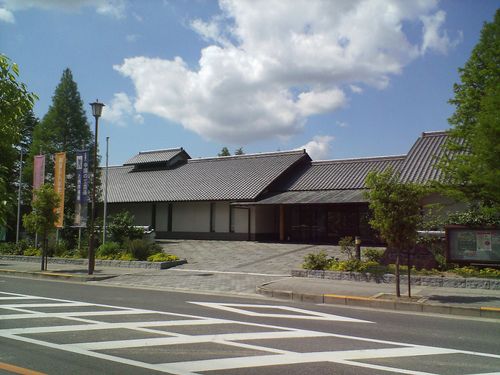
In terms of terrain, the castle uses the valley of the Chihaya River, with valleys to the north, the southeast and the east, so most of its sides are surrounded by deep valleys. Only the ridge behind it connects to the summit of Mount Kongo; the highest point of the castle is 673 meters above sea level, 175 meters above its base. There is no view over the plains, since it was hidden in the mountains. The enclosures are divided into the Honmaru, Ninomaru, Sannomaru, Yonnomaru and Demaru (all popular names). The Honmaru is a flat area about 100 meters long and about 20 meters wide, Chihaya Shrine is enshrined in the Ninomaru, and the Yonnomaru is the largest flat area in the castle. In the belt enclosure below the west side of the Yonnomaru, a trace of the original look remains, like a place to conceal warriors. About 100 meters east of the Honmaru lies the grave of Kusunoki Masanori. Many parts, however, have lost their original form through park development and similar changes, and the stone walls at the Honmaru are the remains of a modern Kusunoki Gongen shrine. A reconstruction model is kept at the Chihayaakasaka Village Local History Museum. It is said to be about a 20-minute walk from the Kongo trailhead, but check trail conditions with the village tourist information before you go.
Sources
This article was written from the official, municipal and tourism-association sources above, and checked against them separately from the writing. Editorial policy
Last updated November 12, 2026