ABOUT
About this spot
Amanohashidate Cable Car and Lift, run by Tango Kairiku Kotsu, links Fuchu Station in Miyazu, Kyoto, with Kasamatsu Station, where Kasamatsu Park stands. It is the way up to a viewpoint over Amanohashidate, one of Japan's Three Views, and the cable car reaches the top in about 4 minutes. One ticket covers both the cable car and the lift, so you can ride up by one and down by the other.
The cable car is a short line, 0.4 km long with an elevation gain of 130 m. It opened in 1927 (Showa 2), was discontinued in 1944 as a non-essential line, and reopened in 1951. Through the window, Aso Sea and Miyazu Bay gradually open out, and on the lift the scenery drifts by slowly in the breeze.
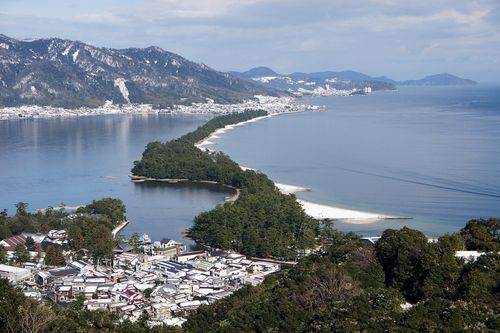
The highlight of Kasamatsu Park is "Shoryukan," the view of Amanohashidate. Looking down from about 130 m above sea level at the sandbar lined with pine trees, you see a shape like a dragon rising to the sky, which gives the spot its name. The park is also said to be the birthplace of "matanozoki," viewing the scenery through your legs from a special platform, so that Amanohashidate appears upside down like a bridge in the sky. At the tip of the viewing area is a circular Sky Deck jutting out, part of whose floor is see-through and shows the view about 40 m below your feet.
The grounds also hold kawarake-nage, where you throw small clay dishes at a "wisdom ring" hung in the air, a worship spot facing the sacred islands of Kanmurijima and Kutsujima, a Bell of Wishes and Wish Keys, and Kasabo Jizo statues scattered around. The bell is said to grant wishes when rung, and couples are encouraged to ring it together. The heart-shaped wish keys are hung on the observation deck and sold at the shop of the AmaTerrace restaurant. From its large windows the restaurant overlooks Amanohashidate, Aso Sea and Miyazu Bay, and the shop on the first floor sells local goods and original Kasabo merchandise.
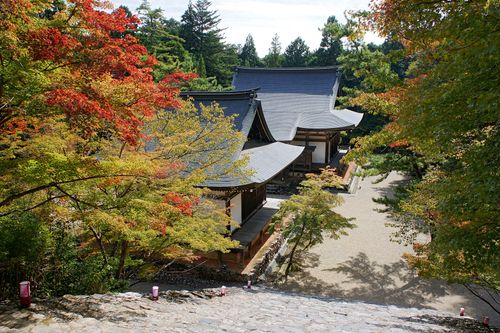
Further up the mountain from Kasamatsu Park stands Nariaiji Temple, the 28th temple of the Saigoku 33 Kannon Pilgrimage. A climbing bus runs from the park to just below the main hall steps, so some visitors continue there after enjoying the park. Nariaiji lies on the southeastern slope of Mt. Tsuzumigatake, and from the panorama lookout above the main hall you can see Amanohashidate and Miyazu Bay on a clear day.
At Fuchu Station, tickets are sold at the window on the right as you face the station building and at a vending machine; the cable car platform is in the center and the lift platform on the left. The lift may be suspended because of weather or maintenance. Kasamatsu Station and the climbing bus stop do not accept cashless payment, so it is wise to carry cash. Check the Tango Kairiku Kotsu website for operating status before you visit.
Sources
This article was written from the official, municipal and tourism-association sources above, and checked against them separately from the writing. Editorial policy
Last updated November 21, 2026