ABOUT
About this spot
Sakuragi Shrine stands in the Sakuradai district of Noda City, Chiba Prefecture, and is introduced as the oldest shrine in the city. As its name ("cherry tree") suggests, it has deep ties to cherry blossoms. A weeping cherry stands beside the large torii gate and a Miyabi cherry grows in front of the main gate; both reach full bloom within March. There is also a "Shichigosan cherry" that blooms twice, in spring and autumn, and cherry motifs appear on the votive plaques, fortune slips, goshuin stamps and goshuin books.
According to the shrine's records, it was founded in 851. Fujiwara no Tsugura, a descendant of Fujiwara no Kamatari and the third son of Fujiwara no Fuyutsugu, is said to have moved to this land and enshrined Ukanomitama-no-mikoto and Takemikazuchi-no-mikoto beneath a large cherry tree. Documents kept by the head priest's family state that Inari Daimyojin was enshrined on the first Horse Day (hatsuuma) of the first year of Ninju, and that a shrine site was later built beside the cherry tree and named "Sakuradai". The place name, once Sakuragi Village and later Sakuradai Village, matches this history. One explanation introduced for the name says the "sa" of "sakura" relates to rice, while "kura" denotes a place where the spirit of rice rests, so that the deity of the mountain rice paddies descends to a cherry tree and brings a good harvest and happiness.
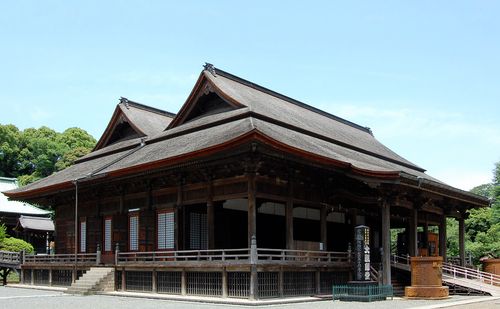
Four deities are now enshrined: Ukanomitama-no-mikoto, Takemikazuchi-no-mikoto, Izanagi-no-mikoto and Izanami-no-mikoto. The precincts include a sacred gate, a worship hall and main sanctuary, and a shrine office. Excavations carried out in 1992 for the shrine's reconstruction uncovered, at the Goten-chi site on the hill behind the head priest's residence, a tanged point from the Paleolithic period, Jomon pottery and stone tools, and the remains of Kofun-period dwellings. Jade magatama and tubular beads and other objects linked to ancient rituals were also found, suggesting that this hill was a place of prayer from very early times. The Nakane Hachimanmae site to the east holds remains of an early Kofun-period dwelling, and the area is regarded as a clue to the dawn of Noda's history.
Visiting in cherry season makes the origin of the shrine's name easy to appreciate, and a spring grand festival is also held. A parking lot reserved for worshippers (300 cars and 10 large tour buses) is available, and the shrine can also be reached on foot from Noda-shi Station on the Tobu Noda Line. Smoking is prohibited in the precincts, and drones, bicycles and commercial photography are not allowed.
Sources
This article was written from the official, municipal and tourism-association sources above, and checked against them separately from the writing. Editorial policy
Last updated November 16, 2026