ABOUT
About this spot
The grounds of Bannaji Temple in Ashikaga, Tochigi Prefecture, are the site of the Ashikaga clan's residence and preserve the look of a Kamakura-period samurai mansion. A moat and earthen ramparts run around the precinct, with gates on all four sides. The clan's founder, Minamoto no Yoshiyasu, is said to have built a residence here in the mid-12th century, and in 1196 Ashikaga Yoshikane built a private Buddhist hall within it, called Horinai Mido, and enshrined Dainichi Nyorai. Yoshikane's Buddhist name was Banna, which gave the temple its name. In 1234 Ashikaga Yoshiuji put the temple buildings in order, and it became the Ashikaga family temple. The site was designated a national historic site as the "Ashikaga Residence Site" in 1922, and under the name "Ashikaga Clan Mansion" it was also chosen among the 100 Fine Castles of Japan (No. 15).
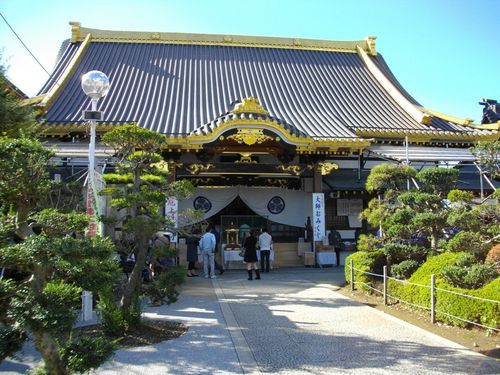
The main hall at the center of the grounds was built in 1299 by Ashikaga Sadauji, the seventh head of the clan, and was designated a National Treasure on 7 August 2013. Its principal image is Dainichi Nyorai, and it is a hip-and-gable-roofed building with tiles, five bays by five bays. The floor plan follows the typical form of an esoteric Buddhist hall, but the bracket sets inside and out use the dense Zen-style arrangement that was the newest style of the time. The Agency for Cultural Affairs praises it highly as a leading medieval esoteric main hall of eastern Japan and as a surviving example of how the Zen style was accepted and took root in Japan. In repairs between 1407 and 1432 the pillars and roof framing were reinforced and the roof was changed to a tiled roof. By the end of the Muromachi period a porch had been added at the rear, and in the middle of the Edo period the front porch was altered.
There are other sights scattered around the grounds. The bell tower is a national Important Cultural Property, and the sutra repository is also included among the Important Cultural Properties. The main gate (Niomon, the Deva Gate), the arched drum bridge, and the multi-treasure pagoda are designated tangible cultural properties of Tochigi Prefecture. As the Ashikaga family temple, the quiet precinct encircled by its moat still keeps traces of the past.
The overlap of a warrior's residence and a temple is the great character of this place. As you look at the moat and ramparts, try comparing the defensive layout of the mansion with the architecture of the main hall that adopted the Zen style. Reception for worship and viewing may change, so please check the temple's official information before visiting.
Sources
This article was written from the official, municipal and tourism-association sources above, and checked against them separately from the writing. Editorial policy
Last updated November 12, 2026