ABOUT
About this spot
Gassan is a volcano 1,984 meters high rising in the southern part of the Dewa hills in central Yamagata Prefecture, spanning the cities and towns of Tsuruoka, Nishikawa and Shonai. It is not currently erupting. The mountain area lies within Bandai-Asahi National Park and is one of Japan's 100 Famous Mountains. The area from roughly 1,400 meters up, including the summit, is a national natural monument, and communities of plants that dislike snow spread across its ridges and summit. The mountain can be seen clearly from the Yamagata Basin, the Shonai Plain and the Mogami region.
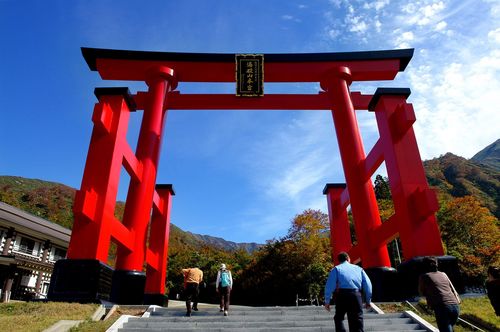
Gassan is counted as one of the Three Mountains of Dewa, together with Mt. Yudono at 1,500 meters and Mt. Haguro at 418 meters, and is known as a mountain of ascetic mountain worship. Gassan Shrine stands at the summit, and the mountain is said to have been opened by Prince Hachiko. Its old name was Kuroushi no Yama. It is also said to be a mountain where ancestral spirits rest and a mountain representing the past world, and place names tied to belief remain today, such as Midagahara, Higashi Fudaraku and Busshoike. Gassan and Gassan Shrine are component cultural properties of the Japan Heritage story ‘A Journey of Rebirth’ set in nature and faith.
As a volcano, Gassan has gentle slopes dotted with wetlands, while on the northwest side a horseshoe-shaped caldera opens and shows a steep face. It was once thought to be a shield volcano, but because of the rocks near the summit and the central cone inside the caldera, it is now regarded as a stratovolcano. The wetland at Tsukimigahara has many small ponds called chito (alpine ponds), and it is a valuable place for its plants. You can see nature typical of high mountains, including high-altitude moorland, alpine plants and subalpine coniferous forest.
Gassan is also a snowy mountain. Thanks to its abundant remaining snow, it is known along with Mt. Norikura and Mt. Tate as one of the mountains in Japan where summer skiing is possible. Matsuo Basho climbed Gassan in 1689 and recorded it in The Narrow Road to the Deep North. Meltwater soaks into the broadleaf forests of beech and other trees and emerges as many springs at the foot of the mountain. These Gassan Foothills Springs were chosen as one of Japan's 100 famous waters and serve as water supply and irrigation sources for the foothill communities.
For climbing, a well-known route rises from the Ubasawa bus stop by lift to Mt. Ubagatake and passes Ushikubi on the way to the summit, where Gassan Shrine stands. Please check whether the lift is operating before you go. Hot springs in and around the mountain include Gassan Shizu Onsen, Yudono Onsen and Hijiori Onsen. Mountain weather, the period when the mountain can be entered and whether visits to the summit shrine are possible may change, so please check the latest information from official sites and local governments before you set out.
Sources
This article was written from the official, municipal and tourism-association sources above, and checked against them separately from the writing. Editorial policy
Last updated November 12, 2026