ABOUT
About this spot
Shirahama Onsen is a hot-spring resort in Shirahama, Nishimuro District, Wakayama Prefecture. Its official name, used by the town and others, is "Shirahama Onsen," while "Nanki-Shirahama Onsen" is a regional collective trademark of the Shirahama Onsen Ryokan Cooperative. Public baths, spring sources and large hotels line the seaside facing the Pacific Ocean. The springs include salt (sodium chloride) springs, carbonated springs and sodium bicarbonate springs.
Its history is long. The Nihon Shoki records that in 658 (the 4th year of Emperor Saimei's reign), Emperor Saimei stayed at the hot spring called Ki no Yu. Emperor Jito and Emperor Monmu are also said to have visited, and in old texts the springs appear under the name Muro no Yu. Together with Dogo Onsen and Arima Onsen, it is counted as one of Japan's three oldest hot springs. In the Edo period it was used by everyone from the lords of the Kishu domain to commoners. The Edo-period "Kii Zoku Fudoki" records that all of the village's sixty-odd households had become inns for bathers. The name "Shirahama" for the hot springs arose in the Taisho era, after a spring source was struck near Shirarahama Beach in 1922 (Taisho 11). When Emperor Showa's visit to Shirahama in 1929 (Showa 4) was reported nationwide, the name became established.
Among the public baths, Saki no Yu is a must. It is an open-air rock bath facing the Pacific Ocean and is the only surviving bath of the "Yusaki Seven Baths," which date back to the age of the Man'yoshu. It is said that Emperor Saimei and Prince Naka no Oe bathed here in 658. Muro no Yu draws on two sources, called Mabuyu and Miyukiyu, so you can enjoy two kinds of water at once. Shirarayu is a public bath just off the sand of Shirarahama Beach. Within the sand of the beach is "Shirasuna," an open-air mixed bath used in swimwear, which becomes a footbath in winter.
Shirarahama Beach is a white beach where quartz sand containing silicic acid makes up about 90 percent. From the Meiji to the Taisho era, its sand was mined as a raw material for glass. The town name Shirahama comes from this beach. As the sand shrank, a beach nourishment project has been carried out since 1989, adding desert sand from near Perth in Australia. In 1996 it was chosen as one of Japan's Best 100 Beaches.
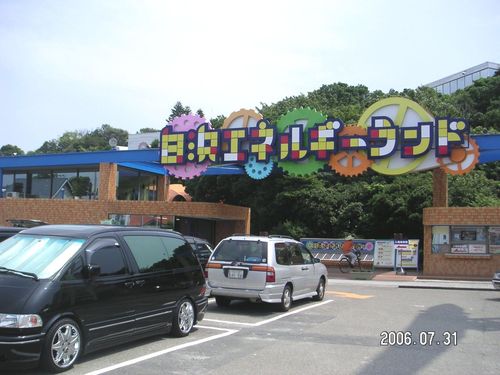
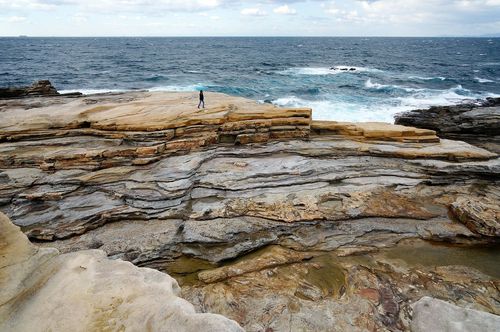
Nearby are scenic spots such as Senjojiki, Engetsu Island and Sandanbeki, as well as Kumano Mitsuyama Shrine, the Minakata Kumagusu Memorial Museum, the Shirahama Undersea Observatory Tower, the Kyoto University Shirahama Aquarium and Adventure World. Local specialties are spiny lobster dishes and wild kue (longtooth grouper). Please check official information on the opening status of each facility before you go.
Sources
This article was written from the official, municipal and tourism-association sources above, and checked against them separately from the writing. Editorial policy
Last updated November 12, 2026