ABOUT
About this spot
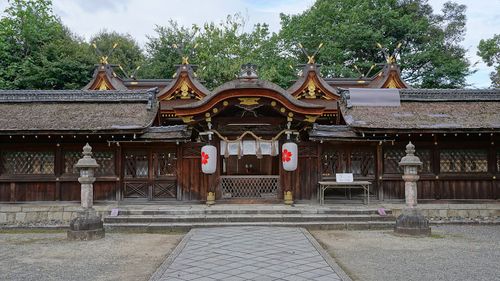
Ryoan-ji is a Rinzai Zen temple in Ukyo Ward, Kyoto, and a sub-temple of Myoshin-ji. It is known around the world for its rock garden, made of nothing but stones set in white sand, and the whole temple is one of the component properties of the World Heritage Site Historic Monuments of Ancient Kyoto.
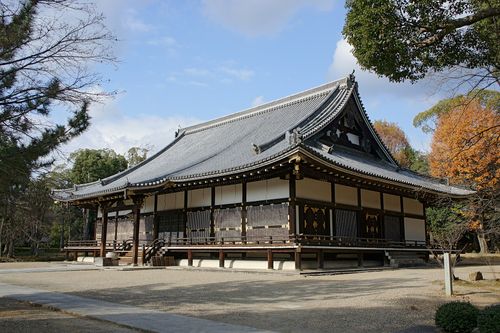
The temple's origins go back to 1450. Hosokawa Katsumoto took over a site that had been a villa of the Tokudaiji family, turned it into a Zen temple. The temple was burned in the Onin War. In 1488 Katsumoto's son Masamoto began the rebuilding, and the main hall (hojo) was raised in 1499. The rock garden is also said to have been made around this time. A fire in the Kansei era destroyed the original buildings, so the present hojo was moved from another temple. It is designated an Important Cultural Property.
The heart of a visit is the rock garden spread out before the hojo. In a long, narrow garden of raked white sand, 15 stones are set in five groups of 5, 2, 3, 2 and 3. Neither the maker nor the date of creation has been pinned down. The stones are said to be arranged so that, from any position, at least one stone is always hidden from view. The garden is also introduced as showing devices such as the use of perspective and an earthen wall treated with oil to guard against deterioration. The rock garden is designated a National Historic Site and a Special Place of Scenic Beauty.
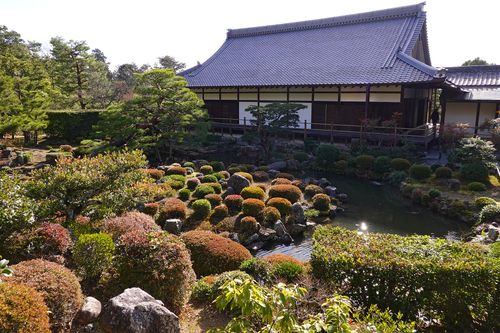
Outside the hojo there is another side to the temple. A pond garden centered on Kyoyo-chi, the pond in front of the temple, is a stroll garden designated a national Place of Scenic Beauty. Water lilies bloom there in summer, and one island in the pond holds a memorial tower to Sanada Yukimura. In front of the tea house Rokuan stands a stone water basin (tsukubai) inscribed with the words meaning 'I only know contentment,' said to have been donated by Tokugawa Mitsukuni. The one near the hojo is a replica.
Among the seasons, the red weeping cherry, at its best around mid-April, the camellia called Wabisuke, said to have been praised by Toyotomi Hideyoshi, and the water lilies of summer are well known.
Please check dates and any other details you are curious about with Ryoan-ji's official guide before you visit.
Sources
This article was written from the official, municipal and tourism-association sources above, and checked against them separately from the writing. Editorial policy
Last updated November 12, 2026