ABOUT
About this spot
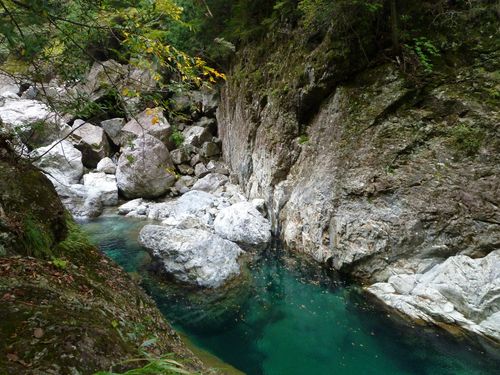
The Akame 48 Waterfalls is a gorge on the upper Takigawa River in Nabari, Mie Prefecture, where waterfalls of many sizes descend in steps along roughly four kilometers of the valley. The number "48" is a figurative way of saying there are too many falls to count. Not every fall is tall, but the scenery of falls and pools stepping up the valley is distinctive.
The rock here is welded tuff known as Muro volcanic rock. Joints formed as it cooled give the riverbed its steps, creating the string of falls. The path follows the stream upstream to the sound of water. Visiting every fall is said to take about 90 minutes one way, and walking itself is the way to enjoy this gorge.
The valley has long been a place of mountain worship, and visits to Fudo Falls are still called "taki-mairi," or waterfall pilgrimage, by locals. The name Akame, "red eyes," is said to come from a legend in which En no Gyoja, the founder of the mountain ascetic tradition, met an ox with red eyes that carried the deity Fudo Myoo. The area is also said to have been a training ground for ninja.
The main highlights are the five falls known as the Akame Gobaku. Fudo Falls and Senju Falls are each about 15 meters high. Nunobiki Falls drops about 30 meters like a pulled bolt of cloth and is the most striking in the gorge. Nina Falls, about 8 meters, splits around a large boulder in its center. Biwa Falls, about 15 meters, has a beautiful pool ringed by cliffs and lies on the border with Nara Prefecture.
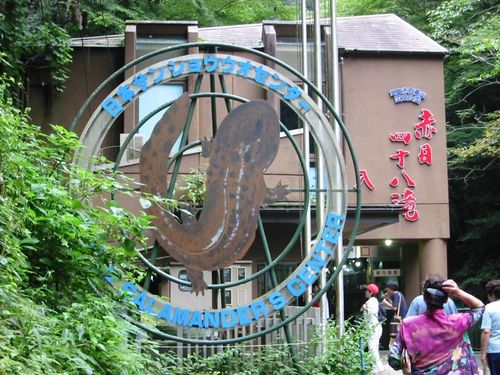
Japanese giant salamanders live in the gorge, and the Japan Salamander Center near the entrance lets visitors see this specially protected natural monument. The area became part of Muro-Akame-Aoyama Quasi-National Park in 1970 and was selected among Japan's 100 Best Waterfalls.
The scenery changes with the seasons, and autumn foliage is popular, with official foliage updates published. Covering every fall means a long walk out and back, so feel free to turn around partway according to your stamina and the weather. Paths by the water can be wet and slippery, so comfortable walking shoes are a good idea. Parts of the gorge may be unavailable depending on weather or conditions, so please check the official information before you go.
The nearest station is Akameguchi on the Kintetsu Osaka Line, about ten minutes from the gorge by bus or car. Koraku Gorge, with its columnar-jointed rock walls, is nearby, and visiting it together shows more of this mountain region near the Nara border.
Sources
This article was written from the official, municipal and tourism-association sources above, and checked against them separately from the writing. Editorial policy
Last updated November 12, 2026