ABOUT
About this spot
Inami, in Nanto City, Toyama Prefecture, is known as a town of wood carving. Its heart is Yokamachi-dori, the street that leads to Zuisen-ji, the Inami branch temple of the Jodo Shinshu school. Carving workshops line the stone-paved street, and the sound of mallets from the workshops has been chosen among the Ministry of the Environment's 100 Soundscapes of Japan. Galleries showing the work of craftspeople, cafes, and shops serving local dishes and soba are scattered along the street, and part of the fun is walking while looking for carvings.
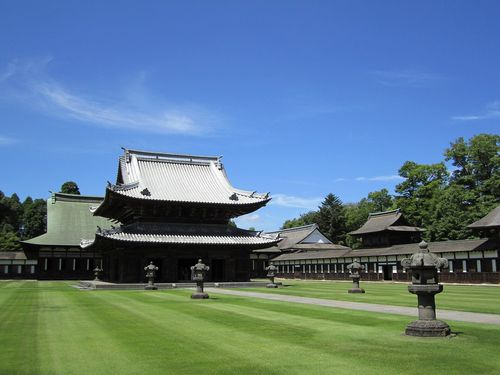
The town's story is closely tied to Zuisen-ji. The temple is said to have been founded in 1390 by Shonyo, the fifth head of Hongan-ji, and from then on Inami prospered as its temple town. Street names such as Yokamachi, Muikamachi and Mikkamachi are said to come from the days of the old markets. Zuisen-ji burned down several times, and each time the local temple carpenters took charge of rebuilding it.
The beginning of Inami carving is traditionally traced to the rebuilding in the middle of the Edo period. During the reconstruction between 1763 and 1774, the court sculptor Maekawa Sanshiro was sent from Hongan-ji in Kyoto, and local carpenters are said to have learned carving from him. The techniques of temple sculpture became the foundation of the later wood-carving culture. The skills spread into a wide range of works: ranma transom panels, lion heads, screens, plaques, the Seven Lucky Gods and Buddhist images, and carvings for festival floats.
Inami carving was designated a national traditional craft in 1975. In 2018 the town was also certified as a Japan Heritage site under the title 'Inami, a wood-carving museum born from a single temple carpenter's chisel.' When the main palace of Nagoya Castle was restored, seven ranma carved in Inami and painted in Kyoto were installed. Some younger makers take on new ideas, such as an electric guitar wrapped by a dragon.
As you walk, you will notice wood carving on things like bus-stop signs. Carving is not kept inside museums; it blends into everyday life. Carving work also goes on in residential areas beyond Yokamachi-dori, so you may hear mallets from a street away. Every four years the Nanto City Inami International Wood Carving Camp is also held.
The main hall of Zuisen-ji was rebuilt in 1774, and carpenters and carvers from Inami took part in that reconstruction. Visiting both the temple and the street shows clearly how the town's history and its carving are linked. Whether workshop visits or experiences are possible differs from place to place, so please check with each workshop or the Nanto City guide before you go.
Sources
This article was written from the official, municipal and tourism-association sources above, and checked against them separately from the writing. Editorial policy
Last updated November 12, 2026