ABOUT
About this spot
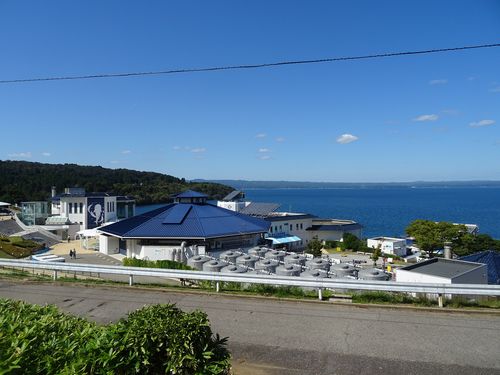
Wakura Onsen is a seaside hot spring town on Nanao Bay in Nanao City, Ishikawa Prefecture. It is regarded as a gateway to the Noto Peninsula and is known for its view over the calm bay. The water is a sodium and calcium chloride spring with a strong salt content, said to keep the body warm for a long time.
Legends surround its beginnings. During the Daido era (806-809), a spring is said to have gushed at Yunotani on Maruyama, west of Mt. Yakushi, before the source moved out under the sea. A second tale says that in the Eisho era (1046-1052), a fisherman and his wife saw a white egret healing itself in the steaming water, and so discovered the bay of Wakura, the welling-up cove.
In the early modern period, Maeda Toshinaga of the Kaga domain had water brought from the spring in 1611, and in 1641 Maeda Toshitsune ordered the spring outlet developed and land reclaimed, which is regarded as the start of the hot spring town. The place name was changed to Wakura in 1674. Full-scale development followed in the Meiji era, the town grew after the war as transport improved, and guest numbers rose during the Noto tourism boom of the high-growth years.
The sights are concentrated in the town. There is the Soyu public bath, open to day visitors, Yuttari Park with its foot bath Tsumagoi-bune no Yu, and Benzaizaki Gensen Park, which has hot spring sources. Other places include the Tsujiguchi Hironobu Museum, the Wakura Onsen Festival Hall, the Wakura Showa Museum and Toy Museum, and the Isolite Diatomite Memorial Hall. Fireworks festivals are held in April and August.
The town was badly hit by the Noto Peninsula Earthquake on January 1, 2024. Hot water supply to the inns stopped for a time but was restored on January 16 after piping repairs. The Soyu reopened on March 26, and on May 3 the inn Hanagoyomi began welcoming tourists again. In March 2025 a Creative Reconstruction Plan for Wakura Onsen was announced, and recovery continues. Please check the official site for the latest status of inns and facilities before you go.
Nearby, Noto Island lies in Nanao Bay and has been reachable by car since the Noto Island Bridge opened in 1982; it has an aquarium. In the city you can also visit the ruins of Nanao Castle, a national historic site and a base of the Hatakeyama clan, with views of the town from the hill.
After strolling the town, you can extend the trip to Noto Island or the Nanao Castle ruins if you have time.
Sources
This article was written from the official, municipal and tourism-association sources above, and checked against them separately from the writing. Editorial policy
Last updated November 12, 2026