ABOUT
About this spot
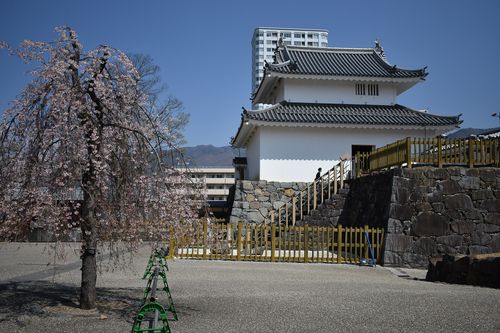
The Takeda Clan Residence (Takeda-shi Yakata), also called Tsutsujigasaki Yakata, is the site of the Takeda clan's warrior residence in Kofu, Yamanashi Prefecture, dating from the Sengoku period. Takeda Nobutora built it in 1519 after moving from Kawada Yakata, and it served as the political center of Kai Province under three generations, Nobutora, Harunobu (Shingen) and Katsuyori, for about 60 years. Retainers' houses and a castle town were laid out around it, and these are said to be the prototype of the city of Kofu. Yogai Castle behind the residence served as the fallback fortress for emergencies.
The highlight is the moat and earthen ramparts around the residence. It lies on the Aikawa alluvial fan, and the ground slopes from north to south. Using that slope, the lower south side has a water moat and the higher north side has a dry moat. Along the dry moat on the east and north sides there are places where you can look down to the moat bottom, and on the south side the ramparts line up beyond the water moat. Surrounded by a triple moat, it has the look of a medieval warrior residence, and defensive features such as gateways and a horse-screen (umadashi) remain.
In Shingen's time the main entrance was the Ote entrance on the east, and there was no entrance on the south. The Ote lies in front of an enclosure ringed by ramparts and a moat, and one enters over an earthen bridge. To block a straight approach, a square stone embankment was built, and beneath it lies a crescent-shaped moat from the Takeda period that was later filled in.
After the Takeda fell, the residence was reworked from the Toyotomi period into the Tokugawa period. The keep platform at the northwest corner of the main enclosure and the Baio enclosure to the southwest are thought to date from that time, and one explanation holds that the Baio enclosure was put in order by the castle warden Hiraiwa Chikayoshi. A picture map shows that the stone walls of the main enclosure were built by Kato Mitsuyasu. When Kofu Castle was built, the residence ceased to be a principal castle. Because remains from the Takeda era overlap with later alterations, reading the signboards at key points helps you tell them apart.
In the main enclosure stands the main hall of Takeda Shrine, founded in 1919 and dedicated to Takeda Shingen. The approach leads from the arched bridge on the south side. The site was designated a national historic site in 1940 and was chosen as one of Japan's 100 Famous Castles in 2006. Outside the residence, the Kofu City Takeda Clan Residence Site History Museum (Shingen Museum) offers explanations, excavated items and a theater, so you can grasp the background before walking the grounds. Some areas may be closed for works or maintenance, so please check Kofu City's information before visiting. Note that another Takeda-shi Yakata exists in Hitachinaka, Ibaraki; this is the one in Kofu.
Sources
This article was written from the official, municipal and tourism-association sources above, and checked against them separately from the writing. Editorial policy
Last updated November 12, 2026