ABOUT
About this spot
Tachibana-dera is an old temple said to stand where Prince Shotoku was born; its formal name is Buttozan Jogu-oin Bodai-ji. According to tradition, it began in 606 (the 14th year of Empress Suiko) when the Tachibana no Miya, a detached palace of Emperor Yomei, was converted into a temple, but its actual founding date is unknown. The first appearance in written records is the entry in the Nihon Shoki for 680 (Tenmu 9) reporting a fire at the "nuns' quarters of Tachibana-dera". The temple's name is said to derive from the story of Tajimamori bringing back tachibana citrus fruit, which was planted in this land.
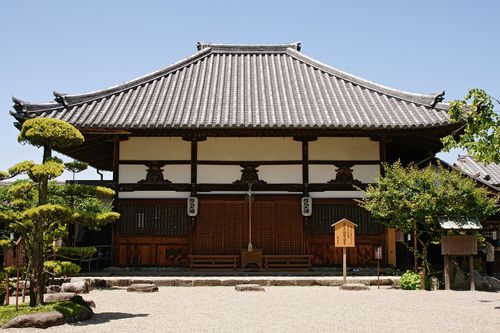
It is said to have been a great temple with 66 halls in the 8th century. The five-story pagoda burned after a lightning strike in 1148 and was later rebuilt as a three-story pagoda, but in 1506 the entire temple was burned by the monks of Tonomine and went into decline. The present halls date from the Edo period. The Taishi-do, which serves as the main hall, was rebuilt over about thirty years starting in 1864.
The first thing to see is the Nimen-seki, standing beside the main hall. This stone, about 1 m high, is carved with a good face and an evil face and is said to represent the two sides of the human heart. The grounds also hold the pagoda site with its surviving central foundation stone, the Sanko-seki, Aji Pond and Renge-zuka, where you can walk among foundation stones and imagine the great temple complex of the past.
Among its treasures, the wooden seated Prince Shotoku (made by Tsubai Shunkei in 1515, Muromachi period) and the Heian-period seated Nyoirin Kannon in the Kannon-do are Important Cultural Properties, and eight hanging scrolls of the Prince's life story and other cultural properties are also kept here. The precinct is a national Historic Site, "Tachibana-dera Precinct". The Ojo-in, rebuilt in 1997, has a coffered ceiling decorated with 260 flower paintings by contemporary artists, and visitors can also copy sutras while chanting the nembutsu. The Kannon-do is the 10th temple of the Shin-Saigoku 33-temple pilgrimage.
For access, take the Asuka Shuyu bus from Kintetsu Kashiharajingu-mae Station or Asuka Station to Kawahara or Okahashimoto, then walk about 3 minutes. By car, there is parking for about 20 cars.
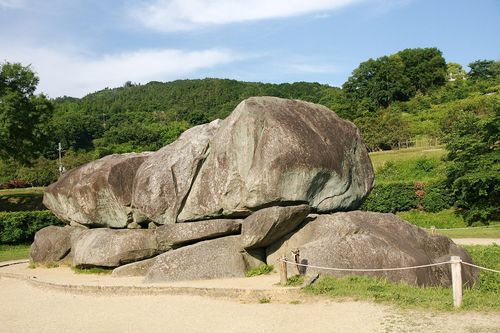
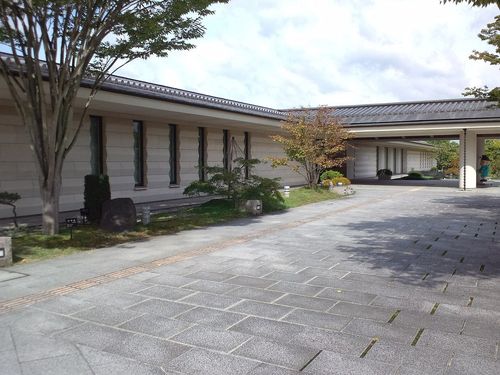
Nearby are Ishibutai Kofun (about 830 m), the Nara Prefectural Manyo Culture Museum and Okadera Temple (about 970 m), so the temple makes a natural core for a trip around Asuka on foot or by bicycle.
Sources
This article was written from the official, municipal and tourism-association sources above, and checked against them separately from the writing. Editorial policy
Last updated November 16, 2026