ABOUT
About this spot
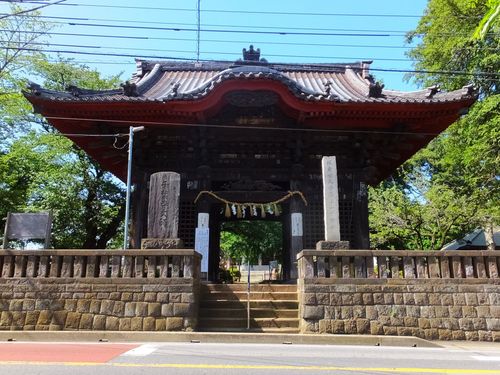
This shrine enshrines Hokushin Myoken Sonsei-o (Ame-no-minakanushi-no-okami), a deity personifying the North Star and the Big Dipper, and is also called Myoken Hongu. Although it stands in the city, a short walk from Chiba Station, the grounds have a pond and groves of trees and a different atmosphere from the streets outside. It was formerly a prefectural shrine, and Futsunushi-no-mikoto and Yamato Takeru-no-mikoto are enshrined alongside the main deity. Its crest is the Sanko-mon, combining the moon and stars, and its shrine emblem is the Kuyo-mon.
The shrine is said to have been founded in 1000, beginning as Hokuzansan Kongoju-ji, a temple whose principal image was Myoken Bosatsu, the guardian deity of the Chiba clan, who ruled the Boso region. In 1181 Chiba Tsunetane invited the god Hachiman from Tsurugaoka Hachimangu, and the present auxiliary shrine Hachiman Jinja is a remnant of that. In 1591 Tokugawa Ieyasu is said to have visited, confirmed the temple's lands and granted a 200-koku shuinchi. In the Edo period it flourished as the Shingon temple Hokuzan Kongoju Sonko-in, and in 1869 it was renamed Chiba Shrine when Shinto and Buddhism were separated. The old halls were destroyed in the Tanabata air raid on July 7, 1945, and were rebuilt in 1954.
The present red-lacquered halls were completed in 1990 in the Heisei Great Construction and are said to be Japan's first two-tier shrine, with two worship halls, one above the other. In the grounds are also Sonseiden, a gate-type branch shrine completed in 1998, and Chiba Tenjin, the old shrine hall moved here and used as a prayer hall. The water pavilion is a surviving building that escaped the Tanabata air raid, and its water basin comes from the earlier pavilion built in 1755. A bridge called Negai-bashi and Kanau-bashi crosses the pond, and you can also see the Myoken Enju Well, long regarded as a sacred spring that grants a single wish, and the 14 auxiliary shrines around the pond.
The biggest event is the Myoken Festival, the annual festival held from August 16 to 22. It is said to have continued since the first one in 1127, is also called the Daradara Festival after the two-stage beating of the big drum that leads the portable shrine, and has been selected as a Chiba Cultural Asset. At Chiba Tenjin, the Toridoori ritual in January, the Uso-kae ritual from late January to early February and the Chi-no-wa Kuguri ritual from late March to mid-April are held as the three great rituals, and the Hashigo-nori ladder performance takes place on January 3. At exam time, people visit Chiba Tenjin, which enshrines Sugawara no Michizane, the god of learning, to pray for success, and in 2018 the shrine was certified as a Welcome Baby shrine, so many families visit as well.
Allow 30 minutes to an hour for a relaxed visit including a stroll around the grounds. It is about a 10-minute walk from JR Chiba Station or Keisei Chiba Station, and about 6 minutes from Yoshikawa-koen Station on the Chiba Urban Monorail. New Year visits bring crowds of worshippers, and since there is no parking in the grounds, public transport is the convenient way to come.
Sources
This article was written from the official, municipal and tourism-association sources above, and checked against them separately from the writing. Editorial policy
Last updated November 12, 2026