SPOT

Tokyo Skytree

A broadcasting tower in Oshiage, Sumida, Tokyo, 634 m tall. It has two observation facilities: the Tembo Deck at 350 m and the Tembo Galleria at 450 m.

TokyoSumida-ku

35.71°N 139.81°E

TRAVEL NOTES

Before you visit Tokyo Skytree

How long does a visit to Tokyo Skytree take?
The estimated time is about 1 hour for the Tembo Deck only, and about 1 to 1.5 hours for both the Tembo Deck and the Tembo Galleria.Source: Tokyo Skytree official website
When is the best time to visit Tokyo Skytree?
November to February, when the air tends to be clear, offers views far into the distance, and for the night view, arriving around sunset is recommended.Source: Tokyo Skytree official website
When is Tokyo Skytree crowded?
It tends to be crowded from about 4 p.m. to 7 p.m., when the sunset and night views can be enjoyed. It is less crowded from right after opening until about 3 p.m.Source: Tokyo Skytree official website

Checked against official information on November 14, 2026. Please see the official website for the latest details.

ABOUT

About this spot

Tokyo Skytree is a broadcasting tower in Oshiage, Sumida Ward, Tokyo, standing 634 meters tall. It is the tallest free-standing broadcasting tower in the world and stands out sharply against the surrounding cityscape. It has two observation facilities: the Tembo Deck at 350 meters and the Tembo Galleria at 450 meters.

Construction began on July 14, 2008, and the tower was completed on February 29, 2012, opening on May 22, 2012. Nikken Sekkei was in charge of design and Obayashi Corporation of construction. The design was unveiled on November 24, 2006, with Kiyokazu Sumikawa and Tadao Ando as supervisors. The cross-section at the base is an equilateral triangle about 68 meters on each side, which turns circular at around 320 meters. Its slightly curved lines, echoing the gentle sori and mukuri curves of Japanese swords and temple architecture, are another distinctive feature. The central core is structurally separated from the outer steel frame, a design that helps reduce shaking during earthquakes. The name was chosen from public submissions, narrowed down and decided by a public vote in 2008, and the official color, Skytree White, is based on the traditional Japanese color aijiro.

The highlight is the sweeping panorama from the Tembo Deck. Floor 350 is the main floor overlooking the cityscape, and on clear days you can even see Mount Fuji. Floor 340 has a glass floor that opens the view right beneath your feet. The Tembo Galleria above is a glass-walled, tube-shaped corridor that lets you feel the height as you walk, and it is introduced as the highest promenade in Tokyo. At night, three lighting designs, Iki, Miyabi and Nobori, light up the tower on a rotating daily basis, and special seasonal lighting is also held.

The scenery changes between day and night, so visiting at different times of day is one way to enjoy it. On clear days with crisp air you can see far into the distance. The observation decks may be closed in some weather, such as strong winds, so it is reassuring to check the official website before you go. If you also plan to visit the Tembo Galleria and the facilities around the tower, it is wise to allow plenty of time.

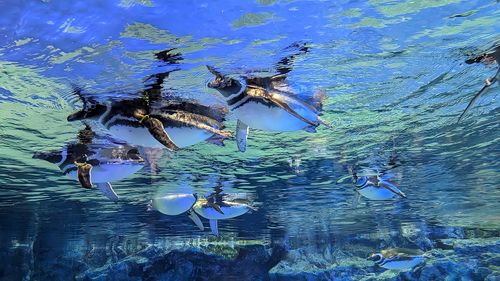
Around the tower spreads Tokyo Skytree Town, which gathers the Tokyo Solamachi shopping complex, the Tokyo Skytree East Tower office building, the Konica Minolta Planetarium Tenku and Sumida Aquarium. Sumida Aquarium opened on May 22, 2012, and is known for its Magellanic penguins, its jellyfish displays and a large tank recreating the sea around the Ogasawara Islands. The tower stands between Tokyo Skytree Station and Oshiage Station, so it is easy to reach from either one.

Sources

  1. tokyo-skytree.jp
  2. ja.wikipedia.org
  3. ja.wikipedia.org

This article was written from the official, municipal and tourism-association sources above, and checked against them separately from the writing. Editorial policy

Last updated November 12, 2026
Share this spot

NEARBY

Nearby recommendations

More places worth visiting in the area.

Sumida-ku, Tokyo

Sumida Aquarium

An indoor aquarium on the 5th and 6th floors of Tokyo Solamachi, opened on May 22, 2012. Exhibits on penguins, jellyfish, the Ogasawara sea and goldfish, each with its own theme, are spread across the floors.

Sumida-ku, Tokyo

Sumida Edo Kiriko Kan

Sumida Edo Kiriko Kan is a shop in Taihei, Sumida, Tokyo, with an Edo kiriko workshop attached. Visitors can try making Edo kiriko, and the shop carries a wide range of items such as toasting glasses and tumblers.

Koto-ku, Tokyo

Kameido Tenjin Shrine

A Tenmangu shrine in Kameido, Koto Ward, Tokyo, dedicated to Sugawara no Michizane (Tenjin) and known as a god of learning. Its shrine buildings, bridges and pond were modeled on Dazaifu Tenmangu.

Taitō City, Tokyo, Tokyo

Sensō-ji

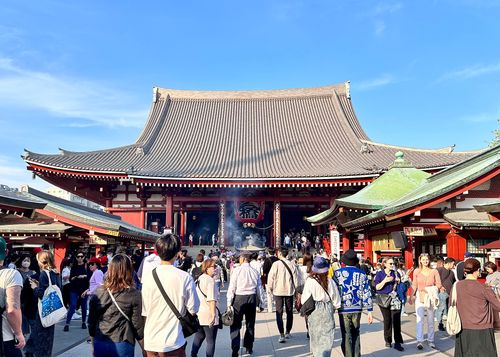
Sensō-ji is the head temple of the Shō-Kannon sect in Asakusa, Taitō City, Tokyo, regarded as the oldest temple in the city. It is known for the approach from Kaminarimon through Nakamise to the main hall.

Sumida City, Tokyo

Mukojima-Hyakkaen Garden

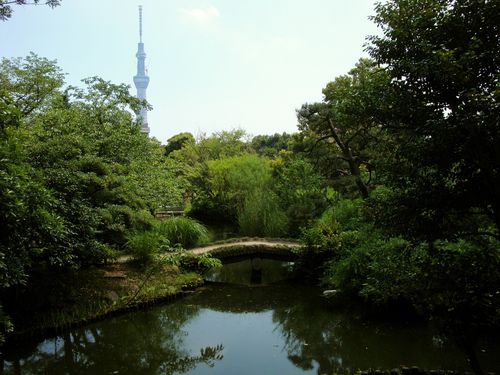
Mukojima-Hyakkaen is a Tokyo metropolitan garden in Higashi-Mukojima, Sumida City. Opened around 1804 by Sahara Kikuu with the help of literati, it is a national Historic Site and Place of Scenic Beauty known for its roughly 30 m Hagi Tunnel.

Sumida City, Tokyo

Ekoin Temple

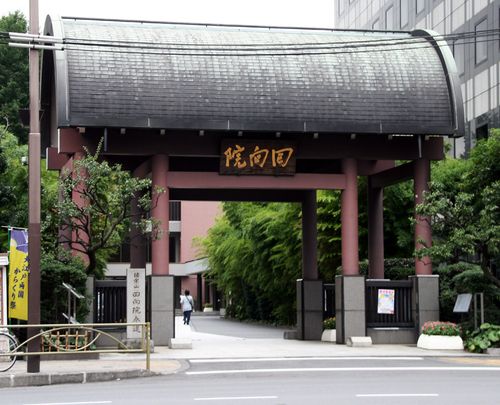
Ekoin is a Jodo-sect temple in Ryogoku, Sumida City, Tokyo. It began as a mass grave for victims of the 1657 Meireki fire, and is known for the grave of Nezumi Kozo, its animal memorials, and the Mound of Strength recalling its sumo history.

AREA

Explore the area

More places in the same city, the same category, and close by.

MORE TO EXPLORE

More from Tokyo

Discover more of the same region on our sister sites.