ABOUT
About this spot
Sakura-no-Baba Josaien is a sightseeing facility in the Ninomaru area of Chuo Ward, Kumamoto City, at the foot of Kumamoto Castle. It opened on March 5, 2011, just before the Kyushu Shinkansen opened along its whole length on March 12, 2011. Its concept is to promote Kumamoto's history and culture and to support sales of local products, and the site is said to have once been the prefectural swimming pool inside the castle grounds.
The complex consists of a general tourist information center, the Kumamoto Castle Museum Wakuwakuza, and Sakura-no-Koji, a street of restaurants and shops. Sakura-no-Koji recreates an Edo-period castle town and holds 23 carefully chosen shops from across Kumamoto Prefecture. The focus is on Kumamoto's local food and regional souvenirs, and the offerings introduced include ikinari dango, a local sweet, and taipien, a soul food beloved by Kumamoto residents.
In the central waterside space, the Kumamoto Castle Omotenashi Bushotai perform, and after watching up close you can have your photo taken with them.
Wakuwakuza is a hands-on museum that uses VR to recreate Kumamoto Castle from the Edo period to the time before the earthquake, with live commentary from staff on the stone walls and the castle's role. On the second floor, the Monogatari Goten presents episodes of Kumamoto's history through acting and video. There are experiences such as riding in a sankin-kotai palanquin, wearing ninja costumes, and a stone-wall building activity called Kiyomasa's Stone Wall Making. Exhibits also show how badly the castle was damaged in the 2016 Kumamoto earthquake and how restoration has progressed.
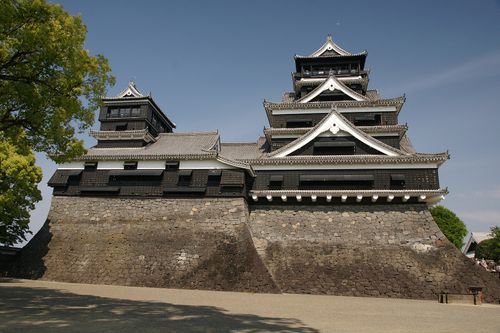
Kumamoto Castle was built by Kato Kiyomasa over about seven years from 1601, and is counted among Japan's three great castles. It was heavily damaged in the 2016 Kumamoto earthquake, and restoration of the whole castle is scheduled to finish in fiscal 2052. The castle is about 370 meters from Josaien, and Josaien is about a five-minute walk from the Kumamoto-jo-Shiyakusho-mae tram stop. You can learn the castle's history and its earthquake record at Wakuwakuza, head up to the keep, and take a break at Sakura-no-Koji afterwards.
The general tourist information center provides sightseeing information for Kumamoto City and Kumamoto Prefecture. On foot from the Kumamoto-jo-Shiyakusho-mae tram stop, Josaien is said to be about five minutes away, Wakuwakuza about seven and the castle keep about ten. For a time Wakuwakuza also served as a temporary theater for the 096k Kumamoto Opera Troupe.
Sources
This article was written from the official, municipal and tourism-association sources above, and checked against them separately from the writing. Editorial policy
Last updated November 12, 2026