ABOUT
About this spot
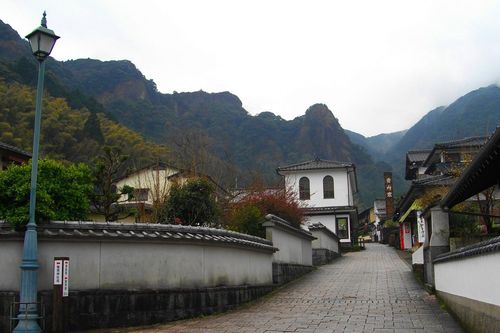
Takeo Onsen is a hot spring resort in Takeo, Saga Prefecture. The Hizen Fudoki, compiled in the Nara period, mentions the spring, showing that the waters have been known since ancient times. A legend involving Empress Jingu and the origin of the spring is also told. In the Edo period the town prospered as a post station on the Nagasaki Kaido road, and visitors are said to have included Date Masamune, Miyamoto Musashi and Siebold. There is also a tradition that the spring was used to treat wounded soldiers during Toyotomi Hideyoshi's campaigns in Korea.
The water is a simple bicarbonate spring, with source temperatures of 45 to 51 degrees Celsius. There are three public baths, Motoyu, Horai-yu and Sagi-no-yu, as well as baths that can be used privately, including former baths of the Nabeshima clan lords. The baths are gathered in the center of town, so moving from one to another is part of the appeal.
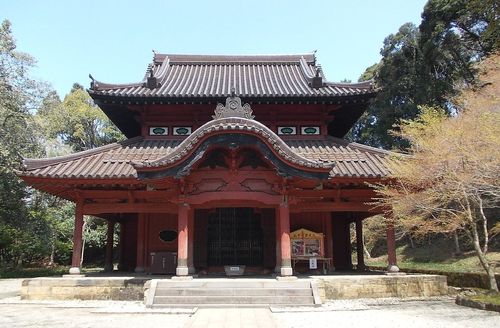
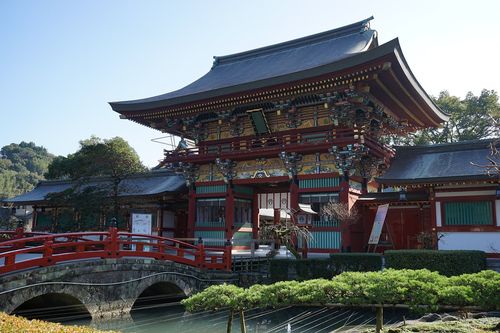
The symbol of the hot spring town is its vermilion Romon gate. It was designed by Tatsuno Kingo, the architect known for Tokyo Station, and built by Shimizu-gumi (now Shimizu Corporation). A two-story gate in the Tenpyo style, it is also known for having been built without nails. In 2005 it was designated an Important Cultural Property together with the Shinkan (New Building) across from it. The Shinkan was also designed by Tatsuno Kingo, finished at around the same time as the gate, and is now open as a museum.
A playful story is told about the gate. In the second-floor ceiling are four carved zodiac animals, and together with the eight zodiac reliefs in the dome of Tokyo Station they are said to complete the twelve animals of the zodiac. They were confirmed during a 2013 restoration, but some researchers doubt that Tatsuno planned it that way, so the truth is unclear.
After the war the town was for a time known as an entertainment-oriented resort, but it now has a calmer atmosphere. The nearest station is Takeo-Onsen on the Nishi-Kyushu Shinkansen and JR Sasebo Line, and the gate is said to be about a ten-minute walk from it.
A good way to spend time here is to look at the architecture of the gate and the Shinkan, then walk through the town and try one of the public baths. Whether buildings can be visited and the conditions for using the baths can change, so please check the latest information from Takeo City or the hot spring's official guide before you go.
Sources
This article was written from the official, municipal and tourism-association sources above, and checked against them separately from the writing. Editorial policy
Last updated November 12, 2026