ABOUT
About this spot
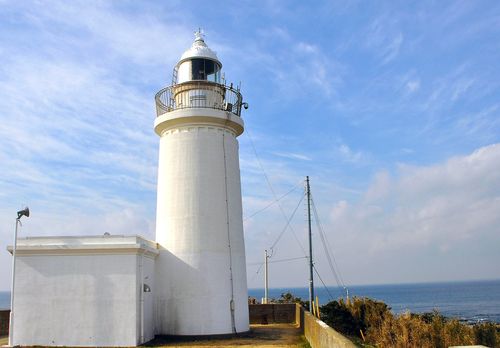
Nojimazaki Lighthouse is a white lighthouse standing on Nojimazaki, the southernmost tip of the Boso Peninsula. It is in Shirahama, Minamiboso City, Chiba Prefecture, inside Minami-Boso Quasi-National Park. On a cape that juts into the Pacific, it has long served as a landmark for ships far offshore.
Its story goes back to the end of the Edo period. It was one of eight lighthouses whose construction was promised in the tariff convention signed in 1866, and it first shone in 1870. It is regarded as the second Western-style lighthouse in Japan, after Kannonzaki Lighthouse. It was designed by a team of French engineers led by Verny.
In the Great Kanto Earthquake of 1923, the tower snapped at about six meters above the ground and collapsed. The present tower is a concrete rebuild completed in 1925. It was heavily damaged again in the Pacific War and fully restored in 1946. It was registered as a Registered Tangible Cultural Property in 2012.
The present tower is white, about 29 meters tall, with the light about 38 meters above sea level. Its lens is a second-order Fresnel type, and the light is said to reach about 17 nautical miles, roughly 32 kilometers.
This is a lighthouse you can enter and climb. From the observation deck at the top, you can take in the breadth of the Pacific. Looking down from above makes the shape of the cape and the waves breaking on the rocks easy to understand. Whether climbing is available can change, so it is best to check beforehand.
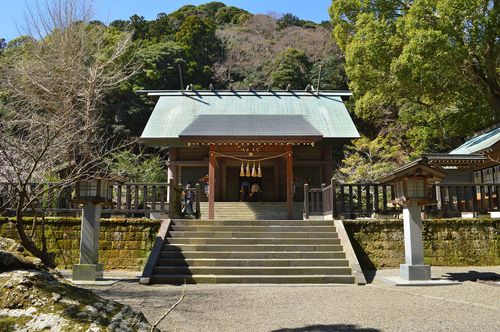
Near the lighthouse is the Nojimazaki Lighthouse Exhibition Room, nicknamed Kirarin-kan, which displays items such as a second-order Fresnel lens once used at Eboshijima Lighthouse. A walking path has been laid out around the cape, so you can circle it and enjoy the coastal views. Itsukushima Shrine stands on the cape, and passing through its grounds brings you out near the lighthouse entrance.
Itsukushima Shrine, the Shirahama Kaiyo Museum, the roadside station Shirahama Nojimazaki, and Shirahama Onsen are all close by. After the lighthouse you can visit the shrine, walk the cape, and rest at the roadside station for a half-day outing. It makes an easy stop on a trip along the southern Boso coast.
Sources
This article was written from the official, municipal and tourism-association sources above, and checked against them separately from the writing. Editorial policy
Last updated November 12, 2026