ABOUT
About this spot
Mintopia Besshi is a tourist facility in Niihama, Ehime Prefecture, that makes use of the remains of the Besshi Copper Mine. The name combines "mine" and "utopia," and it opened on 5 June 1991. The site covers about 60,000 square meters and is divided into two zones: Hadeba and Tonaru.
The Besshi Copper Mine was worked from the Edo period through the Meiji, Taisho, and Showa eras, and was counted among Japan's three great copper mines. By the time it closed in 1973, its mining history had lasted 283 years. Tonaru was the base at the height of operations, while Hadeba was the site of the last mining headquarters.
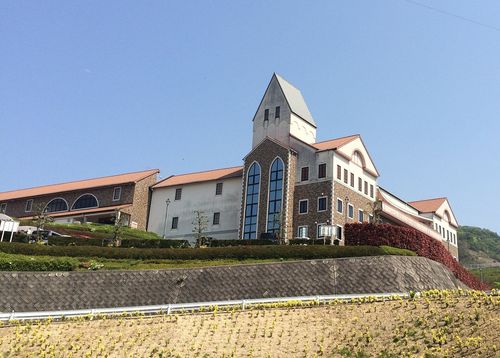
The main building in the Hadeba zone houses the Besshi hot spring "Tenku no Yu," food and souvenir corners, and a kids' park. The heart of the mine tourism is the 333-meter sightseeing tunnel. Built by converting a former powder magazine, it recreates the Besshi mine as it was in the Edo period and in modern times. You reach the tunnel by the sightseeing railway from Hadeba Station on the second floor of the main building. The steam-style locomotive is a scaled-down, electrically driven version of "Besshi No. 1" of the Sumitomo Besshi Mine Railway. Outdoors there are a gold-panning area, a barbecue restaurant, seasonal flower gardens, and a lawn plaza.
Hadeba also preserves modern industrial heritage. The former Hadeba Hydroelectric Power Station was completed in 1912 (Meiji 45) and became a Registered Tangible Cultural Property in 2011. The former Besshi Mine Railway Hadeba Iron Bridge, a pin-connected truss bridge built in 1893 by Harkort of Germany, and the former Hadeba Tunnel were registered in 2009 and are still used by the sightseeing railway. The special-room building of a former guesthouse, in Kyoto-style sukiya architecture, was built in 1937 and moved here in 1991; visitors can see its interior. At the Shikamori company housing site, stone walls on the slope and a flight of 277 stone steps remain.
The Tonaru zone lies in the mountains at an altitude of about 750 meters. Until the mine closed in 1968, company housing, a primary school, and an entertainment hall stood around it and the area was lively. Also called the "Machu Picchu of the East," it preserves large industrial remains such as an ore storage site and a substation ruin. The Tonaru History Museum introduces life in the company housing with models and video, and the Mine Workshop, in the brick building of the former security headquarters, offers activities such as copper relief making. The former incline is now a 220-step staircase you can walk.
Tonaru is reached by road through the mountains, and bus tours are also available. Because it is in mountainous terrain, road and access conditions can change, and the road to Tonaru can be closed in winter, so please check the official website before you visit.
Sources
This article was written from the official, municipal and tourism-association sources above, and checked against them separately from the writing. Editorial policy
Last updated November 12, 2026