ABOUT
About this spot
Tamagawa Onsen is a hot spring in Shibukurosawa, Tamagawa, Tazawako, Senboku City, Akita Prefecture, rising in the mountains of Towada-Hachimantai National Park. According to the official site, the water is strongly acidic, with hydrochloric acid as its main component. The source called Obuki gushes 9,000 liters of hot water per minute, and its flow is described as the largest in Japan.
Its history is long: it is said that matagi hunters found the spring in 1680 and first called it "Shika-no-yu". It was renamed Tamagawa Onsen in 1934 (Showa 9) and designated a national health resort in 1959. Today there are two inns, Tamagawa Onsen and Shin-Tamagawa Onsen, offering ryokan rooms as well as self-catering rooms for those who stay a long time. The main bathhouse has 11 pools. Shin-Tamagawa Onsen, which opened in 1998, lies about one kilometer from the source area of Tamagawa Onsen.
The famous natural bedrock bath uses geothermal heat, and there is also an indoor bedrock bath inside the facility, so you can choose according to the weather and how you feel. The water contains radium, and the official site also mentions the "hormesis effect" of low-dose radiation. However, people feel the effects differently, and those with chronic conditions are advised to consult a doctor beforehand.
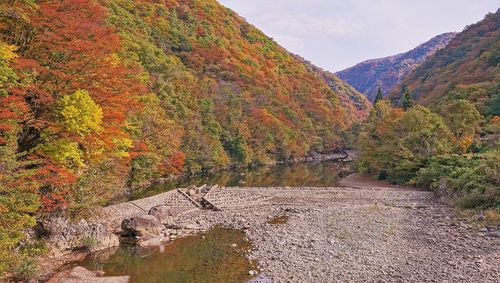
The strong acidity also left a history behind. The acidic water that flowed out was called "Tamagawa poison water" and damaged farmland and fish in the Omono River basin, which runs through Omagari. After acidic water began to be drawn into Lake Tazawa in 1940, the lake's native kunimasu fish became extinct. As a countermeasure, neutralization with limestone began in 1972 and went into full operation in 1991, and the river's pH has recovered to about 6.8 near the measuring point.
When walking around the area, please follow the bear precautions given on the official site. Measures include stepped-up grass cutting, repellents, and loans of bear bells and trekking poles, and visitors are asked to avoid going out at night or early in the morning. Access is by bus from JR Tazawako Station; in winter, Route 341 is closed to general vehicles, so please check the latest conditions beforehand.
Sources
This article was written from the official, municipal and tourism-association sources above, and checked against them separately from the writing. Editorial policy
Last updated November 16, 2026