ABOUT
About this spot
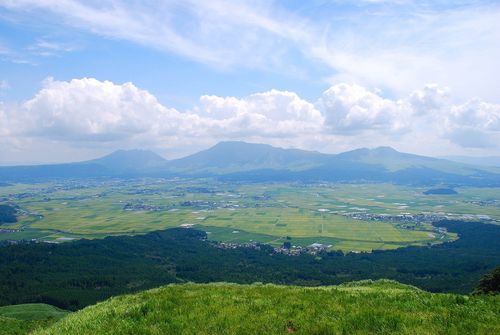
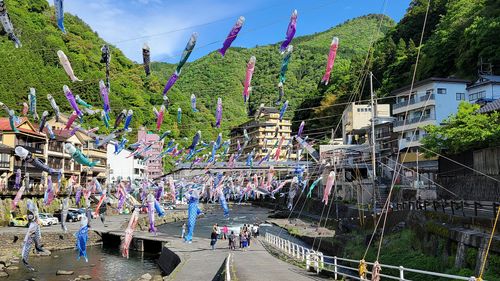
Kurokawa Onsen, in Minamioguni-machi, Aso District, Kumamoto Prefecture, is a hot spring village where Japanese-style inns stand close together along the gorge of the Tanoharu River, which flows through the mountains north of Mt. Aso. About 30 inns are gathered here, and sulfur springs at 80 to 98°C rise from relatively shallow strata beneath the village. Though it is a rural hot spring village far from both expressways and train stations, many travelers come here to hop between its open-air baths. It was originally a farming-village spa for therapeutic bathing, and in 1964 it was designated a National Health Resort Hot Spring as part of Minamioguni Onsen.
The idea behind the townscape is expressed in the phrase "Kurokawa Onsen, one inn." It treats the whole hot spring village as a single inn, regarding each inn as a detached guest room and the streets that link them as connecting corridors, and it is also known through the catchphrase "The whole town is one inn: the streets are corridors and the inns are guest rooms."
That idea takes shape in the Nyuto Tegata, or bath pass. This wooden pass began in 1986 and is now made from thinned cedar and hinoki cypress from the Oguni area. With it you can choose any three of the open-air baths at 25 Kurokawa Onsen inns, and one of the three can instead be used for food or souvenirs. Passes are sold at each inn in the village or at Kaze no Ya, the inn association office. Once used, the pass can be kept as a memento or offered at the village's Jizo hall.
No account of today's landscape is complete without Tetsuya Goto of the inn Shinmeikan. Goto carved a cave bath by chiseling into the rock of the hill behind his inn, and he brought in trees from that hillside to create open-air baths that feel close to nature. Other inns followed his approach, and Goto has come to be called "the father of Kurokawa."
In 1986 the inn association split into a signage team, an environment team and a planning and publicity team to shape the look of the whole village. The 200 mismatched signs that had cluttered the streets were all removed and replaced with shared signs, and the hills, once bare cedar plantations, were pruned and replanted. Today's scenery wrapped in the green of mixed woodland grew out of this community-wide effort. The village also has two communal baths, Jizo-yu and Ana-yu, and touring the open-air baths and streets in a yukata is the quintessential way to spend time in Kurokawa.
Sources
This article was written from the official, municipal and tourism-association sources above, and checked against them separately from the writing. Editorial policy
Last updated November 12, 2026