ABOUT
About this spot
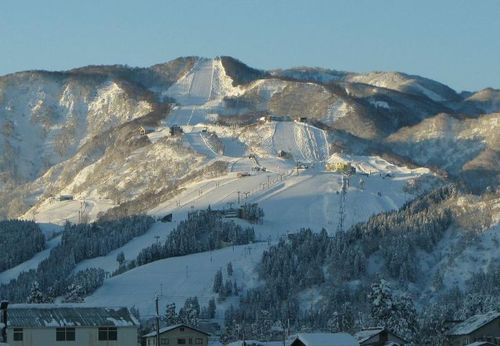
Echigo-Yuzawa Onsen is a hot spring town in Yuzawa, Minamiuonuma District, Niigata Prefecture, known as one of the settings of Yasunari Kawabata's novel Snow Country. Yuzawa lies at the southern tip of Niigata, bordering Gunma and Nagano, ringed by peaks of around 2,000 m such as Mt. Tanigawa and Mt. Naeba, and nearly all of it is designated a special heavy-snowfall area. On the Joetsu Shinkansen it is about 66 minutes from Tokyo at the fastest.
The hot spring has a long history. Tradition says that around 1075 Takahashi Hanroku of Shibata in Echigo, the founder of the Takahan inn, found the spring along the Yunosawa River. In the Edo period traffic along the Mikuni Highway made the name of the hot spring known, and in 1769 the village and three bathhouse owners began running it jointly. The Nihon Kosen-shi, a record of the nation's mineral springs compiled by the Home Ministry's Sanitation Bureau in 1886, records three inns and about 10,000 bathers a year. Kawabata visited in 1934, and the novel he later wrote, Snow Country, made the name of the hot spring town known across Japan.
The water is weakly alkaline, low-tonicity and hot. There are simple, sulfur and chloride springs, and source temperatures range from 32 to 83 degrees Celsius. The water is managed centrally by a cooperative and piped to public baths, inns, and nearby homes and resort condominiums. A hot spring cooperative was formed in 1958, and the central management system was completed in 1975.
Along the prefectural road west of Echigo-Yuzawa Station stand ryokan, hotels, restaurants, souvenir shops and foot baths. The public baths the town has run include Komako no Yu, and there are privately run baths and a bath inside the station. Foot baths are scattered around the town, and there are also hand baths on the station platforms.
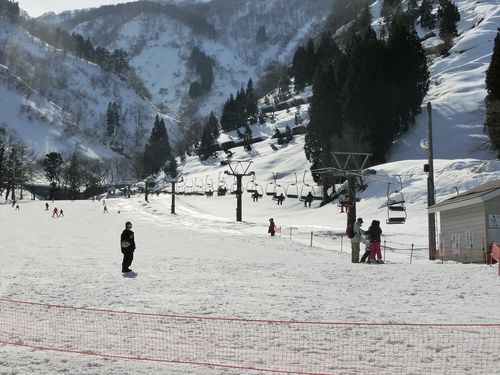
The station building, CoCoLo Yuzawa, houses Ponshukan, centered on sake, and Yunosawa, a bath that adds sake to the spring water. Uonuma Koshihikari rice and sake are local specialties, a pleasure to enjoy after a soak. The town's history also includes the arrival of skiing in 1913, and buses from the station reach the nearby ski areas.
The opening of the Joetsu Shinkansen in 1982 and the Kan-Etsu Expressway in 1985 changed the face of the town. Resort condominiums were built one after another from the late Showa era into the early Heisei era. With several faces, hot springs, snow, sake and literature, it is more than just a hot spring town.
Sources
This article was written from the official, municipal and tourism-association sources above, and checked against them separately from the writing. Editorial policy
Last updated November 16, 2026