SPOT

Mogami River Boat Ride

A boat trip down the Mogami River from Koguchi Port to Kusanagi Port in Tozawa, Yamagata. The ride takes about one hour, and the boatman sings the Mogami River boat song as you go.

YamagataTozawa Village

38.74°N 140.14°E

TRAVEL NOTES

Before you visit Mogami River Boat Ride

How long does a visit to Mogami River Boat Ride take?
The boat ride takes about 1 hour.Source: Tozawa Village tourism website
When is the best time to visit Mogami River Boat Ride?
Autumn leaves in the Mogami Gorge are usually at their best from late October to early November.Source: Tozawa Village tourism website

Checked against official information on November 14, 2026. Please see the official website for the latest details.

ABOUT

About this spot

The Mogami River boat ride (Mogamikyo Basho Line) is a river trip down the Mogami River from the Tozawa Domain Boat Checkpoint at Furukuchi Port in Tozawa Village, Yamagata, to Kusanagi Port at the River Station Mogamikyo Kusanagi. It takes about an hour and is a regular route that runs all year. All boats are non-smoking, and there are several ways to get back after landing: a local bus to Furukuchi Port, a round trip, or a car transfer service.

The Mogami River is a first-class river flowing through Yamagata, 229 kilometers long. It is regarded as the longest river in Japan whose basin lies almost entirely within one prefecture, and is counted among Japan's three great rapid rivers. In the past it was a main transport route, carrying safflower and rice from the inland through the port of Sakata to the Kyoto and Osaka area.

On board, the boatman guides you while singing the "Mogami River Boat Song." The song is said to have been born in 1936 from a radio program of NHK's Sendai station, with the lyrics written by Watanabe Kunitoshi, who lived in Aterazawa. It was created drawing on folk songs such as Sakata Oiwake. As you listen to the boatman's voice, the scenery of the Mogami Gorge rises on both banks.

On his journey recorded in "Oku no Hosomichi," the poet Matsuo Basho stopped at Oishida and went down the Mogami River by boat from Motoaikai to Kiyokawa. He left the haiku "Gathering the rains of May, how swift the Mogami River," and his travelogue records that the water was so full that the boat was in danger. There is also a route that goes out and back from Kusanagi Port to Shiraito Falls, a scenic spot Basho is also said to have seen from his boat.

At Furukuchi Port there is a soba restaurant, Basho-an, where you can try 28-style soba made with locally grown buckwheat flour. On the boat, a reservation-only "boat lunch" is also offered, with bento made from local ingredients. From December to March the boats run as heated boats, making a snow-viewing trip, and in winter a special charter "kotatsu boat" is also announced. Operation depends on weather and water level, so please check the operator's information before your visit.

The Mogami River turns west near Shinjo and flows into the Sea of Japan at Sakata. The many hina dolls, thought to have been brought from the Kyoto-Osaka area, that remain in old houses along the river also speak of this history of river transport.

Sources

  1. ja.wikipedia.org
  2. tabi-mag.jp

This article was written from the official, municipal and tourism-association sources above, and checked against them separately from the writing. Editorial policy

Last updated November 12, 2026
Share this spot

NEARBY

Nearby recommendations

More places worth visiting in the area.

Tsuruoka City, Yamagata

Mount Haguro

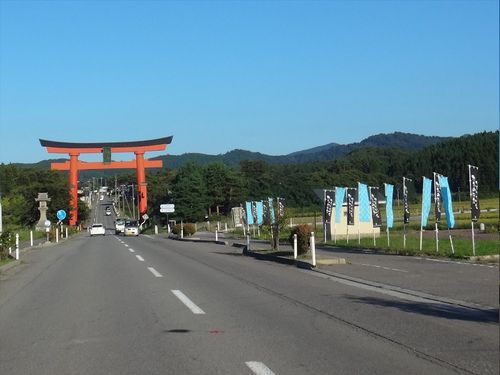
Mount Haguro is a mountain in Tsuruoka, Yamagata. The approach runs from the Zuijinmon gate up to the summit as a stone stairway of 2,446 steps, lined on both sides by cedars designated a Special Natural Monument.

Tsuruoka City / Nishikawa Town / Shonai Town, Yamagata

Mt. Gassan

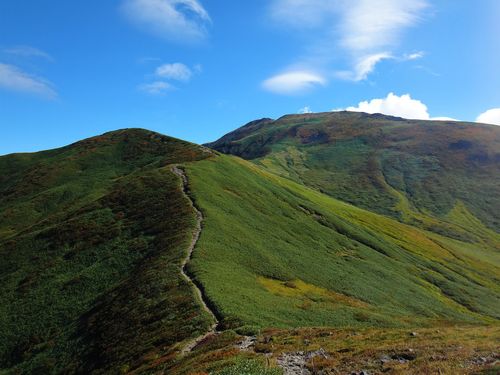
Mt. Gassan is a 1,984 m volcano in central Yamagata, spanning Tsuruoka, Nishikawa and Shonai. Along with Mt. Haguro and Mt. Yudono it is one of the Three Mountains of Dewa, known as a mountain of ascetic mountain worship.

Tsuruoka City, Yamagata

Yudonosan Shrine

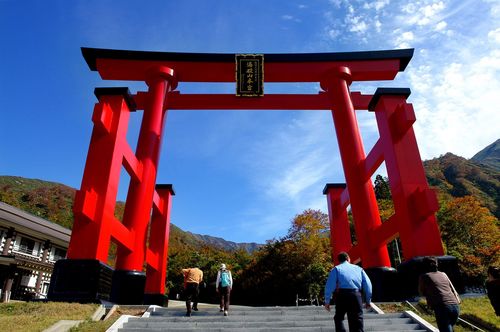
Yudonosan Shrine, in Tsuruoka, Yamagata, sits on the slopes of Mount Yudono, one of the Three Mountains of Dewa. Its main sanctuary has no main hall or worship hall; the mountain itself is worshipped.

Sakata City, Yamagata

Sankyo Warehouses

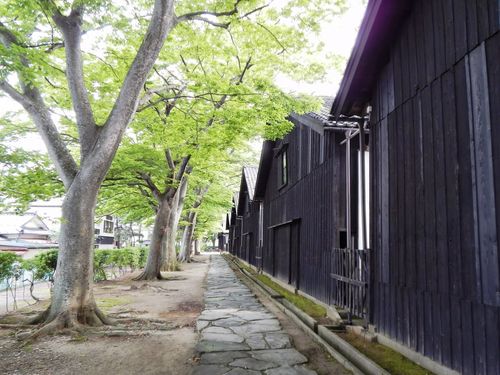
Sankyo Warehouses is a group of earthen-walled rice storehouses along the Niida River in Sakata, Yamagata. A zelkova-lined avenue runs along its west side, and the site was designated a national historic site in 2021.

Sakata City, Yamagata

Soma-ro

A restored ryotei restaurant that symbolizes Sakata's prosperity. This splendid building, a nationally registered Tangible Cultural Property, lets you savor the finest of the glamorous Kitamaebune trading-ship culture, with Sakata maiko dance performances, works by Yumeji Takehisa, and a luxurious tea room.

Tsuruoka City, Yamagata

Tsuruoka City Kamo Aquarium

Tsuruoka City Kamo Aquarium in Tsuruoka, Yamagata, is known for its jellyfish exhibits. It ranked first in the world for the number of jellyfish species on display in 2005 and was certified by Guinness World Records in 2012.

AREA

Explore the area

More places in the same city, the same category, and close by.

MORE TO EXPLORE

More from Yamagata

Discover more of the same region on our sister sites.