MODEL COURSE — Oita Beppu City
Beppu Hells Tour: A One-Day Course from Kannawa to Tatsumaki Jigoku
This course is for travelers who want to compare the colors and phenomena of the Beppu Hells, the steaming hot springs behind Beppu Onsen. You walk between four hells in the Kannawa area, then take a local bus to Chinoike Jigoku and Tatsumaki Jigoku, about 3 km away. Umi Jigoku is about 20 minutes by bus from Beppu Station.
6 stops · Umi Jigoku (Sea Hell) → Oniishi Bozu Jigoku (Oniishi Bozu Hell) → Oniyama Jigoku (Oniyama Hell) → Shiraike Jigoku (Shiraike Hell) → Chinoike Jigoku (Blood Pond Hell) → Tatsumaki Jigoku (Tatsumaki Hell)
ROUTE
The route
Umi Jigoku (Sea Hell)
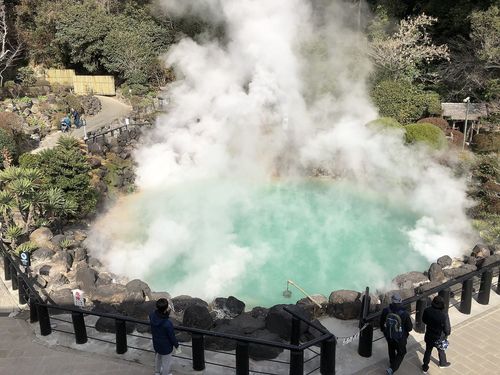
Start at Umi Jigoku, whose cobalt-blue water looks like the sea. The color comes from iron sulfate dissolved in the water, and the hell is said to have formed about 1,200 years ago when Mt. Tsurumi erupted. Stroll its garden of trees and flowers before walking to Oniishibozu Jigoku.
Next ↓On foot
Oniishi Bozu Jigoku (Oniishi Bozu Hell)
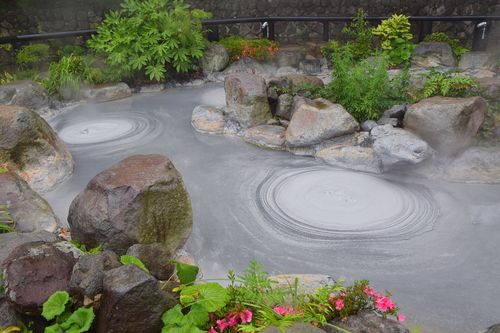
This hell in the Kannawa area is within walking distance of Umi Jigoku and has a footbath on its grounds. It makes a good first rest stop of the walk. Once your feet are warm, walk on to Oniyama Jigoku.
Next ↓On foot
Oniyama Jigoku (Oniyama Hell)
Also called Crocodile Hell. In 1923 it became the first place in Japan to raise crocodiles using hot spring heat, and about 70 live here today. Look for Ichiro III, about 4 m long, and the exhibit room with the stuffed first-generation Ichiro.

Next ↓On foot
Shiraike Jigoku (Shiraike Hell)
The water rises clear and colorless, then turns a pale bluish white as it falls into the pond and loses heat and pressure, which gives the hell its name. Its calm Japanese garden is a national Place of Scenic Beauty, with a tropical fish hall and a Kunisaki-style pagoda. Afterward, take a bus from Kannawa to Chinoike Jigoku.

Next ↓Kamenoi Bus No. 16 from Kannawa to Chinoike Jigoku-mae
Chinoike Jigoku (Blood Pond Hell)
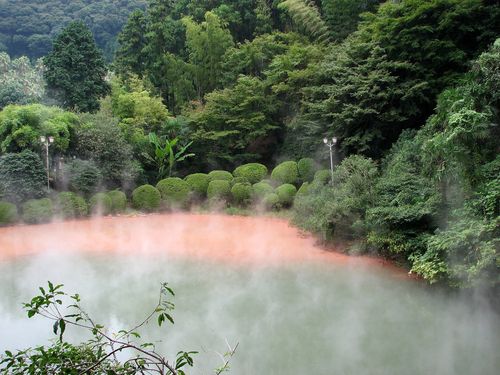
This pond of red hot mud was recorded as a red hot spring in the Bungo Fudoki, a Nara-period gazetteer. It became a national Place of Scenic Beauty in 2009. The mud was once used to make a skin ointment and to dye cloth and house pillars. Tatsumaki Jigoku is close by.
Next ↓On foot
Tatsumaki Jigoku (Tatsumaki Hell)
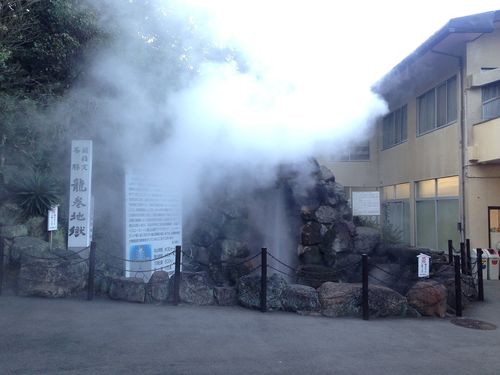
End at this geyser, a Beppu City natural monument that spouts boiling water at regular intervals. A roof covers it because the eruptions are strong enough to reach about 30 m. A lamp above the entrance sign turns red when an eruption is near, so watch for it while you wait.
Tips for the day
- The hells around Umi Jigoku are within walking distance, but Chinoike and Tatsumaki are about 3 km from Kannawa, so use a bus or car. To return, Kamegawa Station is about a 25-minute walk from Tatsumaki Jigoku, with JR trains to Beppu Station.
Sources
- Beppu Jigoku Meguri (Beppu Hells Association)
- Beppu Jigoku Meguri: Access
- Umi Jigoku official site
- Oniyama Jigoku (Beppu Jigoku Meguri)
- Shiraike Jigoku (Beppu Jigoku Meguri)
- Chinoike Jigoku official site
- Tatsumaki Jigoku (Beppu Jigoku Meguri)
The route and travel times were checked against the official, municipal, tourism-association and transport sources above, separately from the writing. Check each spot's page and official website for admission fees and opening hours. Checked against official information on November 28, 2026.