MODEL COURSE — Nagasaki Nagasaki City
A One-Day Walk Through Nagasaki's Port Town and Foreign Settlement
This course traces Nagasaki's history of trade and its foreign settlement, from Megane Bridge through Dejima and Shinchi Chinatown to Dutch Slope, Oura Cathedral and Glover Garden in Minamiyamate. You head from north to south on foot, and can use the streetcar for longer stretches. It suits first-time visitors to Nagasaki.
6 stops · Spectacles Bridge (Megane-bashi) → Dejima → Nagasaki Shinchi Chinatown → Oranda-zaka Slope → Oura Cathedral → Glover Garden
ROUTE
The route
Spectacles Bridge (Megane-bashi)
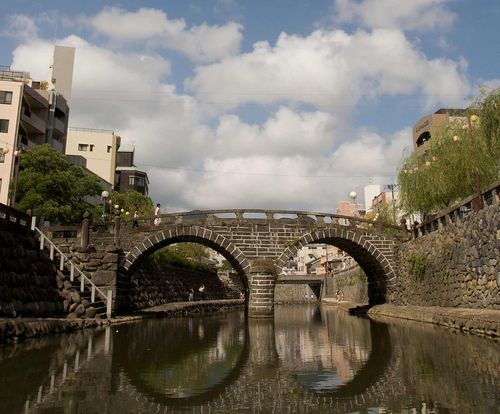
This stone bridge is said to have been built in 1634 by the Zen priest Mokusu Nyojo of Kofukuji Temple, and is a national Important Cultural Property. Its name is said to come from its reflection on the water forming two circles like a pair of glasses. From here, head south along the Nakashima River toward Dejima.
Next ↓On foot
Dejima
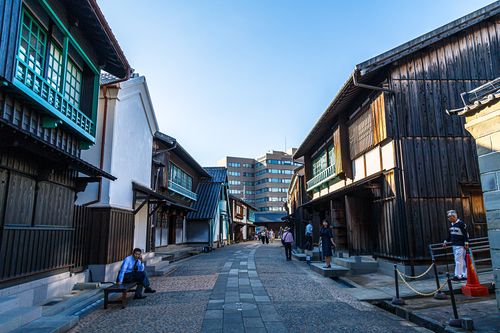
Sixteen buildings, including the Kapitan's residence, have been restored to their early-19th-century appearance, letting you walk through the trading post of the isolation era. Also look for remains from other periods, such as the seawall stones from the early days when the Portuguese lived here and the stone warehouse from after the opening of the country. Leave via Omotemon Bridge for Chinatown.
Next ↓On foot
Nagasaki Shinchi Chinatown
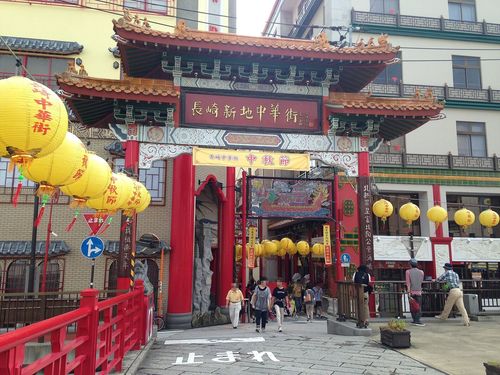
This district was built on reclaimed land in the mid-Edo period for warehouses holding goods traded with China, a trading legacy alongside Dejima. About 40 shops line its cross-shaped stone-paved streets, made with help from Fujian Province, making it a good lunch stop for champon.
Next ↓On foot
Oranda-zaka Slope
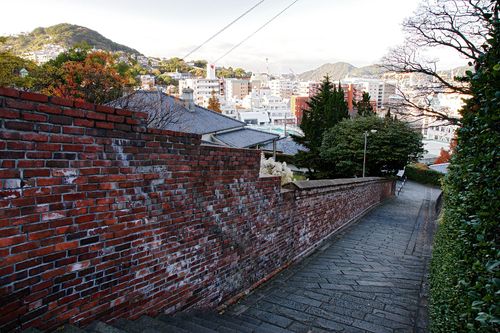
A stone-paved slope in the Higashiyamate district lined with Western-style houses. In Nagasaki, perhaps due to the Dutch on Dejima, non-Asian foreigners were still called "Oranda-san" after the country opened, which is thought to be how the slopes of the settlement got this name. After taking in the settlement atmosphere, continue on to Minamiyamate.
Next ↓On foot
Oura Cathedral
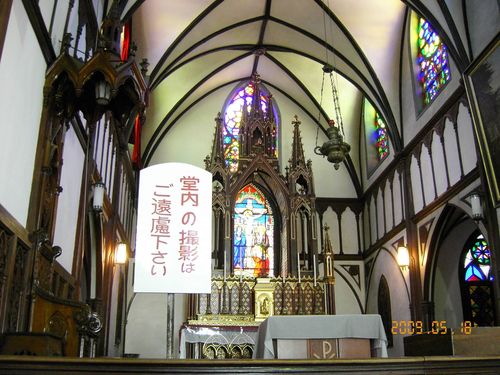
A Gothic-style church built for foreign residents of the settlement, it is considered the oldest surviving church in Japan and is a National Treasure. It is also where hidden Christians from Urakami came forward in 1865 in the "Discovery of Hidden Christians," and is a component of a World Cultural Heritage site. Afterward, head next door to Glover Garden.
Next ↓On foot
Glover Garden
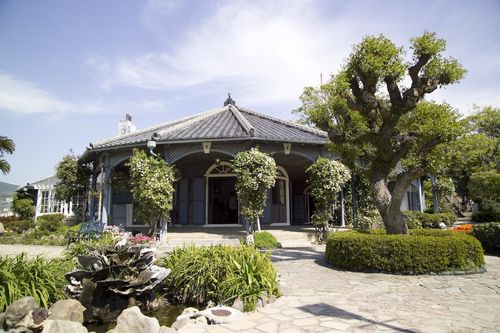
The Former Glover House, home of Scottish merchant Thomas Glover, is a component of the World Heritage "Sites of Japan's Meiji Industrial Revolution." Western-style houses relocated from around the city also stand here, and the stone paths and steps offer views over Nagasaki Harbor, a fitting end to the course.
Tips for the day
- Minamiyamate and Higashiyamate have many stone paths and steps, so wear comfortable shoes. To walk less, use the Oura Tenshudo streetcar stop (about 5 minutes on foot to Oura Cathedral) or the Medical Center stop (about 4 minutes on foot to Dutch Slope).
Sources
- Dejima (City of Nagasaki)
- Glover Garden
- Glover Garden Access
- Nagasaki Shinchi Chinatown
- Nagasaki Tabinet: Megane Bridge
- Nagasaki Tabinet: Dutch Slope
- Nagasaki Tabinet: Oura Cathedral
The route and travel times were checked against the official, municipal, tourism-association and transport sources above, separately from the writing. Check each spot's page and official website for admission fees and opening hours. Checked against official information on November 28, 2026.