CATEGORY — Kanagawa
History & Culture in Kanagawa
The 21 places in the "History & Culture" category that we feature in Kanagawa, sorted by how often they are viewed.
Most of them are in Kamakura City (13), Yokohama City (3).
SPOTS
Places in this list
Sorted by number of views
Kamakura City, KanagawaHistory & Culture
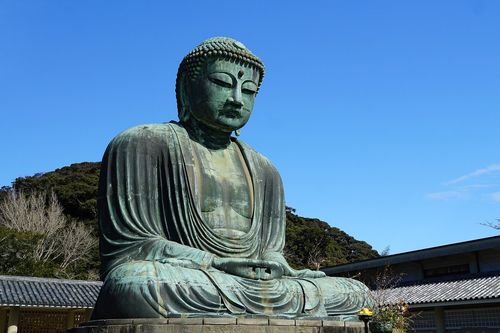
Kotoku-in Temple (Great Buddha of Kamakura)
Kotoku-in Temple (Great Buddha of Kamakura) is a Jodo-sect temple in Kamakura, Kanagawa. Its bronze seated Amida Buddha, the Great Buddha, is a National Treasure about 11.39 m tall and weighing about 121 tons.
Odawara City, KanagawaHistory & Culture
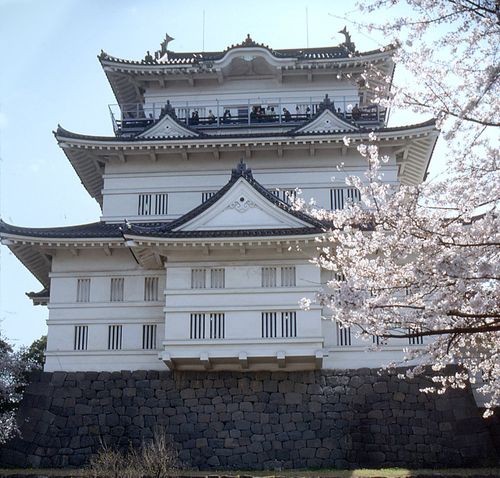
Odawara Castle
Odawara Castle is a hirayamajiro in Odawara, Kanagawa, and was the Hojo clan's base in the Sengoku period. Its Soguruwa outer defenses were earthen ramparts and dry moats about 9 km long protecting the whole town.
Kamakura City, KanagawaHistory & Culture
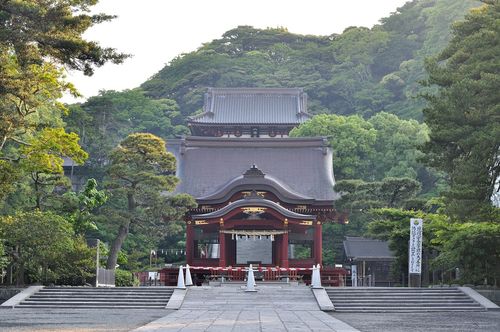
Tsurugaoka Hachimangu Shrine
Tsurugaoka Hachimangu Shrine is in central Kamakura, its main shrine at the end of Wakamiya Oji, which runs from Yuigahama. Tied to Minamoto no Yoritomo, founder of the Kamakura shogunate, its grounds are a national historic site.
Kamakura, Kanagawa, KanagawaHistory & Culture
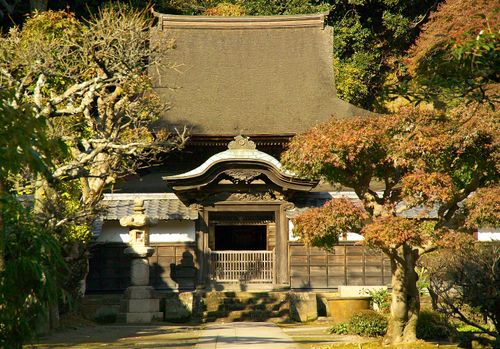
Engaku-ji
Engaku-ji in Yamanouchi, Kamakura, Kanagawa, is the head temple of the Rinzai Engaku-ji school and second of the Kamakura Five Mountains. Founded by Hōjō Tokimune, it has the Shariden and Great Bell as National Treasures.
Kamakura, KanagawaHistory & Culture
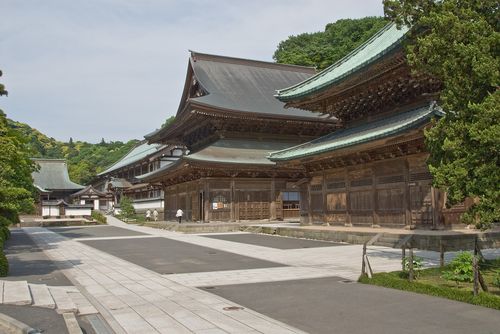
Kencho-ji Temple
Kencho-ji is the head temple of the Rinzai Kenchoji school in Yamanouchi, Kamakura, ranked first among the Kamakura Five Mountains. Founded in 1253 by Hojo Tokiyori, it is known for its National Treasure bell and designated historic site grounds.
Yokohama, KanagawaHistory & Culture
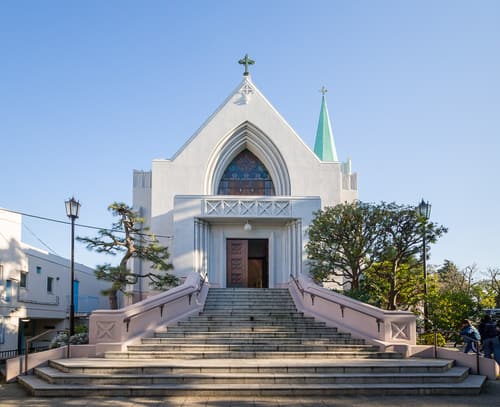
Yamate Catholic Church (Sacred Heart Cathedral)
Yamate Catholic Church in Yamate-cho, Yokohama, is the cathedral of the Catholic Diocese of Yokohama. Rebuilt in 1933 in Neo-Gothic style, it is known for its white walls, green spire and the grand stone steps at the front.
Hakone, KanagawaHistory & Culture
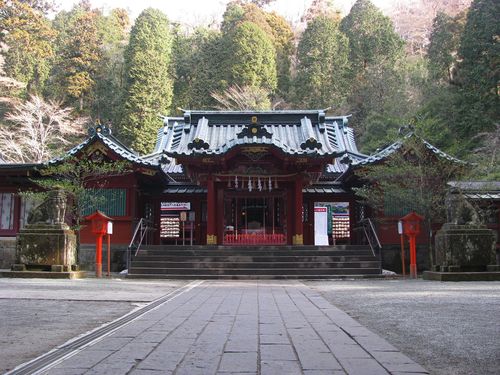
Hakone Shrine
Hakone Shrine stands on the shore of Lake Ashi in Hakone, Kanagawa. It enshrines the deity Hakone Okami and is known for the torii gate in the lake and its long patronage by samurai.
Kamakura, KanagawaHistory & Culture
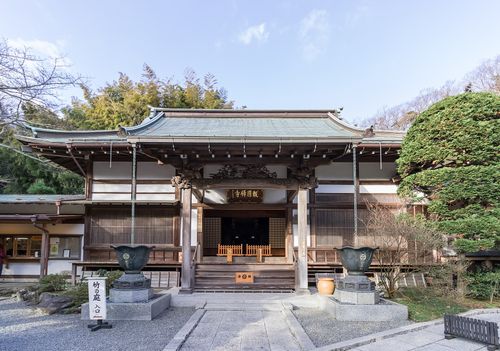
Hokoku-ji Temple
Hokoku-ji is a Rinzai Zen temple in Jomyoji, Kamakura, Kanagawa. Known as the Bamboo Temple, it is famous for its grove of about 2,000 moso bamboo.
Kawasaki, KanagawaHistory & Culture
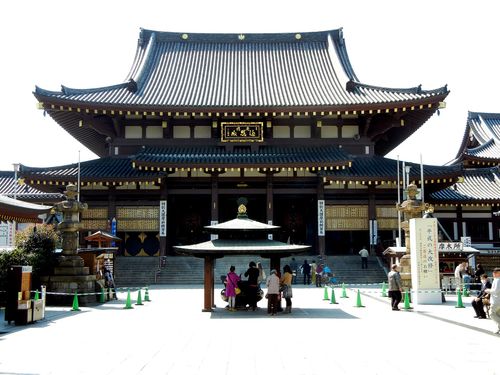
Heiken-ji Temple (Kawasaki Daishi)
Heiken-ji, popularly called Kawasaki Daishi, is a head temple of the Shingon Chizan school in Kawasaki, Kanagawa. Said to date from 1128, it is known as a temple for warding off bad luck and draws huge crowds at New Year.

Kamakura, KanagawaHistory & Culture
Tokei-ji Temple
Tokei-ji is a Rinzai Zen temple in Yamanouchi, Kamakura. In the Edo period it was known as a "divorce temple" that sheltered women seeking to end their marriages, and today it is loved for its seasonal flowers.
Kamakura, KanagawaHistory & Culture
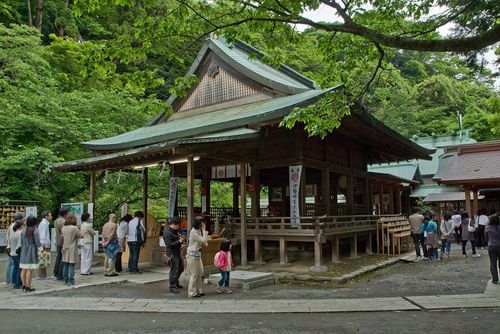
Kamakura-gu Shrine
Kamakura-gu is a Shinto shrine in Nikaido, Kamakura, Kanagawa. It enshrines Prince Morinaga, a son of Emperor Go-Daigo, and was founded in 1869 by order of Emperor Meiji. It is known for the dungeon where the prince is said to have been confined and for the "cup-breaking" place where visitors smash away misfortune.
Kamakura, KanagawaHistory & Culture
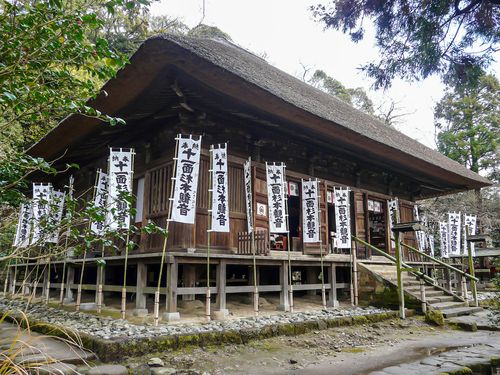
Sugimoto-dera Temple
Sugimoto-dera is a temple in Nikaido, Kamakura, Kanagawa, said to be the oldest in the city. It is Temple No. 1 of the Bando 33 Kannon pilgrimage, known for its thatched Kannon Hall, mossy stone steps and Important Cultural Property statues.
Fujisawa, KanagawaHistory & Culture
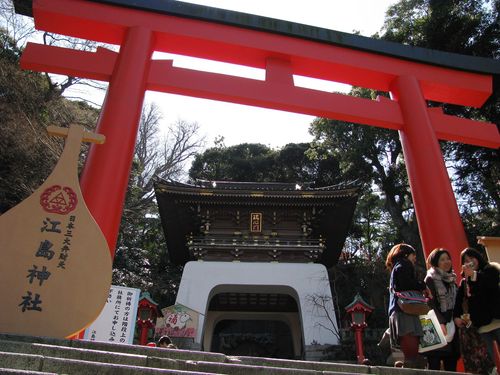
Enoshima Shrine
Enoshima Shrine is a Shinto shrine on Enoshima Island in Fujisawa, Kanagawa. A general name for three shrines (Hetsumiya, Nakatsumiya and Okutsumiya) enshrining the Munakata goddesses, it is counted among Japan's three great Benzaiten shrines and is known for the "Eight-Direction Glaring Turtle" ceiling painting and the dragon-palace-style Zuishinmon gate.
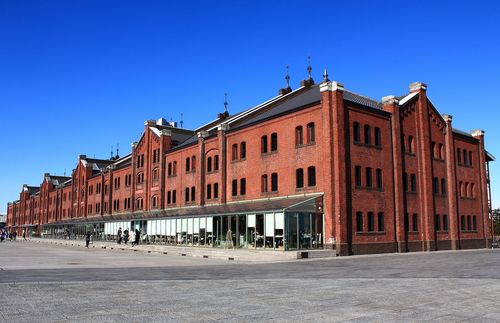
Naka-ku, Yokohama City, KanagawaHistory & Culture
Yokohama Red Brick Warehouse
Yokohama Red Brick Warehouse is made up of two brick warehouses on Shinko Pier in Yokohama Port, reused as cultural and commercial facilities. Warehouse No. 2 was completed in 1911 and No. 1 in 1913.
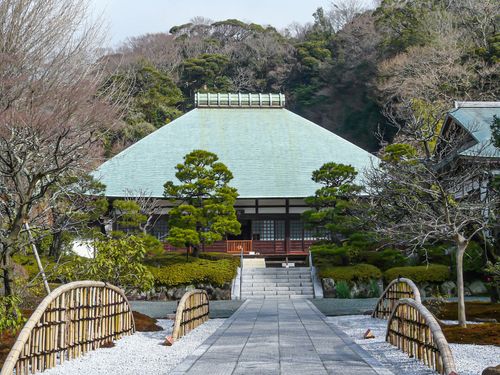
Kamakura, KanagawaHistory & Culture
Jomyo-ji Temple
Jomyo-ji is a Rinzai Zen temple of the Kenchoji school in Jomyoji, Kamakura, Kanagawa. Said to have been founded in 1188 by Ashikaga Yoshikane, it is the fifth of the Kamakura Gozan temples, and is known for its main hall, dry landscape garden, the Kisenan tea house, and a stone pagoda said to be the grave of Ashikaga Sadauji.

Kamakura, KanagawaHistory & Culture
Zuisen-ji Temple
Zuisen-ji is a Rinzai Zen temple in a valley in Nikaido, Kamakura, founded by Muso Soseki and long the family temple of the Ashikaga Kamakura shoguns, known for its nationally designated garden and winter daffodils.
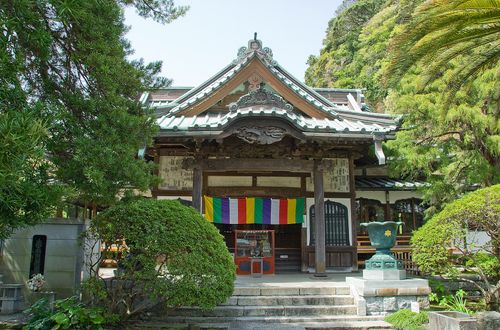
Kamakura, KanagawaHistory & Culture
Anyo-in Temple (Kamakura)
Anyo-in is a Jodo-shu temple in Omachi, Kamakura, Kanagawa. It grew out of Choraku-ji, linked to Hojo Masako, and is known for its Important Cultural Property hokyointo, said to be the oldest in Kamakura, and for the azaleas and the makki tree at its gate.
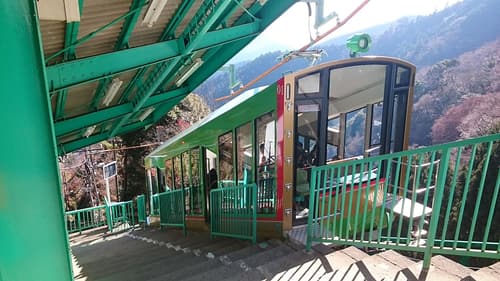
Isehara, KanagawaHistory & Culture
Oyama Cable Car
The Oyama Cable Car is a funicular run by Oyama Kanko Dentetsu on Mount Oyama in Isehara, Kanagawa. In about six minutes it climbs from Oyama Cable Station to Afuri Shrine Station, with views from the mountainside and access to Oyama Afuri Shrine.
Kamakura, KanagawaHistory & Culture
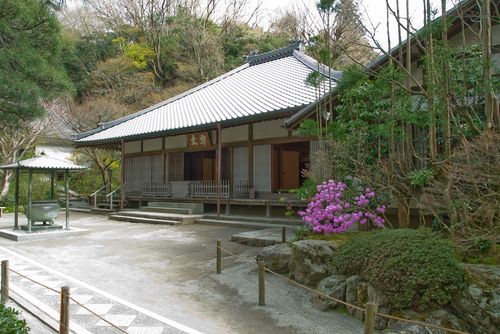
Meigetsu-in Temple
Meigetsu-in is a Rinzai-school temple of the Kenchoji branch in Kita-Kamakura, Kanagawa. It is called the Hydrangea Temple for the blue blooms that fill its grounds in the rainy season, and for its round Window of Enlightenment.
Kamakura, KanagawaHistory & Culture
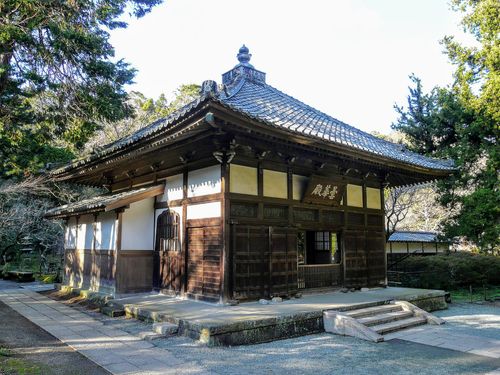
Jochi-ji Temple
Jochi-ji is a Rinzai Zen temple of the Engaku-ji school in Yamanouchi, Kamakura, Kanagawa Prefecture. Fourth of the Kamakura Gozan, its grounds are a national historic site, known for the Chinese-style bell-tower gate, the Three Buddhas, rock-cut yagura caves and the Hotei statue.
Yokohama, KanagawaHistory & Culture
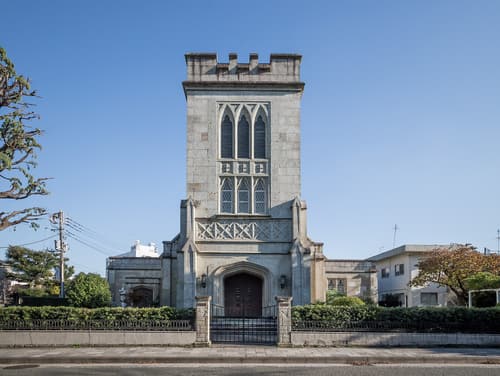
Yokohama Christ Church (Yamate Anglican Church)
Yokohama Yamate Anglican Church, facing Motomachi Park in Yamate-cho, Yokohama, is a church of the Nippon Sei Ko Kai. Its Norman-style Oya stone church, completed in 1931, is one of the best-known Western-style buildings in Yamate.
MORE
More lists for Kanagawa
Browse the other lists for the same prefecture.
Kanagawa by category
- History & Culture21 places
- Nature & Scenic Views9 places
- Museums & Galleries7 places
- Parks & Gardens5 places