SPOT

Umitama Experience Park "Tsukumi Dolphin Island"

Tsukumi Dolphin Island on the Youra Peninsula in Tsukumi, Oita, is a dolphin experience facility set in the natural sea, with jumping shows, feeding and close encounters.

OitaTsukumi

33.07°N 131.96°E

ABOUT

About this spot

Umitama Experience Park "Tsukumi Dolphin Island" is a hands-on facility on the Youra Peninsula in Tsukumi, Oita Prefecture, themed around meeting dolphins. Instead of tanks, it uses a natural cove of the sea with enclosures, so you meet dolphins on an open scale unlike an ordinary aquarium.

It opened in April 2011. Marine Palace, which runs the Umitama-go aquarium in Oita City, and Tsukumi City created it together by renovating the site of an ocean fishing pond once run by a third-sector company. The sea area enclosed in the cove covers about 12,500 square meters and is said to be among the largest water surfaces of its kind in Japan.

The stars are bottlenose dolphins. From a stage facing the sea, with blue sky and green hills behind, you can watch dolphins leap high in jumping performances. The experience programs are plentiful: "Feed the dolphins" lets you hand-feed them, "Play with the dolphins" lets you gently touch them, and "Swim with the dolphins" is for children aged four and up. There is also a dolphin boat ride on the water. Program details and conditions change by season, so check the official website before you go. Other animals, including Magellanic penguins, live here as well.

The best time is a clear day from spring to autumn, when the sea is beautiful and the jumps look even better in the sunlight. Because it is a seaside facility, programs can change with weather and sea conditions. There is a maintenance closure in winter, so be sure to check in advance if you visit then. Combining a show with a few experiences, plan about two to three hours.

Nearby, you can pair it with Umitama-go in Oita City, run by the same Marine Palace, for a trip centered on dolphins. Tsukumi is surrounded by the indented coastline of the Youra Peninsula, and the seaside drive is part of the fun. It is about 15 minutes by car from Tsukumi Station and about 20 minutes from Tsukumi IC, so most visitors come by car.

Sources

  1. ja.wikipedia.org
  2. rurubu.jp

This article was written from the official, municipal and tourism-association sources above, and checked against them separately from the writing. Editorial policy

Last updated November 21, 2026
Share this spot

NEARBY

Nearby recommendations

More places worth visiting in the area.

Usuki City, Oita

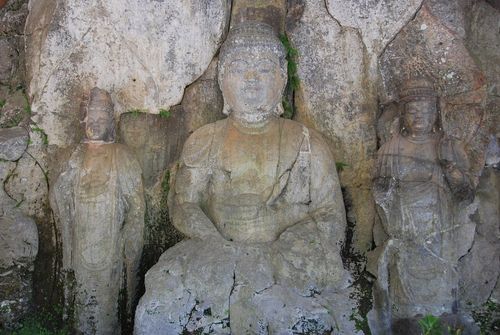
Usuki Stone Buddhas

A representative group of cliff-carved Buddhas made from the late Heian to Kamakura periods. For the quality of their carving and their scale, 61 of them are designated National Treasures.

Oita, Oita

Sasamuta Shrine

Sasamuta Shrine is an old shrine in the hills of Samuta, Oita City, Oita Prefecture. Regarded as the Ichinomiya of Bungo Province, it is the only Taisha shrine of Bungo listed in the Engishiki, and was formerly a national middle-rank shrine. It is also known for its old wisteria and the Edo-period stone Mannen Bridge.

Oita City, Oita

Funai Castle

A castle ruin in central Oita, now developed as Oita Castle Ruins Park. Two Edo-period turrets survive, and the site was named one of Japan's 100 Famous Castles in 2006.

Bungo-ono, Oita

Chinda Falls

Chinda Falls on the middle Ono River in Bungo-ono, Oita, consists of the wide Odaki falls, about 100 m across, and the Medaki falls on a tributary. Water drops over columnar-jointed rock, earning it the name "Niagara of Ono." It is a nationally registered monument that Sesshu is said to have painted.

Oita, Oita

Yusuhara Hachimangu Shrine

Yusuhara Hachimangu is a shrine at the foot of Mt. Futaba in Oita City, Oita Prefecture. The Ichinomiya of Bungo Province, it has ten buildings in Hachiman-zukuri style designated as Important Cultural Properties and is known for its great camphor tree, said to be 3,000 years old and a National Natural Monument.

Oita City, Oita

Oita Marine Palace Aquarium "Umitamago"

An aquarium on the Takasakiyama-shita coast in Oita, linked to the neighboring Takasakiyama Natural Zoo by a pedestrian overpass. Its central feature is the Great Migration Tank, and its largest tank is said to hold 1,250 tons.

AREA

Explore the area

More places in the same city, the same category, and close by.

MORE TO EXPLORE

More from Oita

Discover more of the same region on our sister sites.