ABOUT
About this spot
Miboro Dam stands on the uppermost reach of the Sho River in Shirakawa Village, Gifu Prefecture. Managed by J-POWER, it is a dam built only for power generation. A rockfill dam 131 meters high, its huge embankment of piled rock and earth fills the gap between the mountains. The reservoir, Lake Miboro, covers 880 hectares. The reservoir, Lake Miboro, has a total capacity of about 370 million cubic meters, second only to Tokuyama Dam among rockfill dams.
A concrete gravity dam was first considered, but because the ground was weak the plan was changed to a rockfill dam, making this a pioneer among Japan's large rockfill dams. Construction began in 1957 and finished in 1961. The residents of the villages that were submerged moved away after long compensation talks, and the calm surface of the lake now covers the life of those former villages. The Sho River rises near Mount Eboshi and flows into Toyama Bay; it is a swift river that has long been developed for hydropower.
No account of this lake is complete without the Shokawa cherry trees. Two giant old Azuma-higan cherry trees, said to be over 400 years old, from the grounds of the temples Korinji and Shorenji in the submerged area, were moved to a hillside by the shore. The transplant began in 1960, the trees took root and set buds the following spring, and in the spring of 1970 they bloomed in full, a success. In spring the cherry blossoms are the highlight.
Across from the dam is Miboro Dam Side Park, with the Miboro Electric Power Museum and the Shokawa Cherry Memorial Hall. The museum explains how the dam was built through footage and panels, and its theater shows an 18-minute film about the construction and the moving of the cherry trees. The rest area on the second floor looks straight onto the dam wall, and you can ask for a dam card if you like.
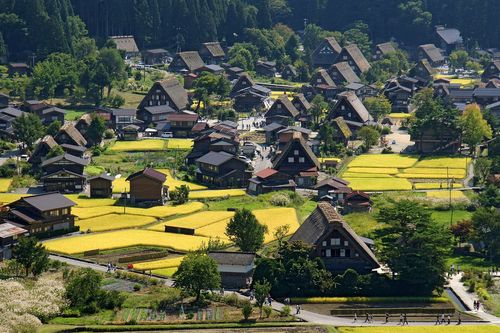
Spring, when the cherry blossoms are out, is especially recommended, but the museum is closed for a long period in winter, so please check the official site before visiting. Plan one to two hours for the museum and the lakeside views. Nearby you can combine the World Heritage gassho villages of Shirakawa-go and Gokayama downstream. It is about 25 minutes by car from Shokawa IC on the Tokai-Hokuriku Expressway.
Sources
This article was written from the official, municipal and tourism-association sources above, and checked against them separately from the writing. Editorial policy
Last updated November 21, 2026