ABOUT
About this spot
Get off at Izu-Atagawa Station on the Izukyu Line and the garden is one minute away on foot, a zoo and botanical garden of crocodilians and tropical plants whose greenhouses line the street in front of the station. It opened on September 20, 1958 and uses the heat of the Atagawa hot spring to warm the grounds, so tropical plants grow here even in winter. It was designated a museum under Japan's Museum Act in 1976, so it is both a place to play and a facility for exhibiting and studying living things.
As the name suggests, crocodilians are the stars. According to the official website, the garden keeps about 130 animals of 16 species. A renovation in 2008 put a roof over the whole exhibit and made it possible to watch the crocodiles from the side and from below. There is also an albino saltwater crocodile known as the white crocodile.
The other pillar is tropical plants. Eight greenhouses heated by the Atagawa hot springs keep a tropical environment even in winter and show what is said to be about 5,000 species. About 20 kinds of bananas are grown here. It also drew attention when Puya chilensis, grown from seed imported from Germany in 1990, flowered for the first time in February 2021.
The Amazonian manatee is an animal kept only here in Japan, and it is said to have been on display for more than 50 years. Unexpected animals such as the salmon-crested cockatoo and the Japanese giant salamander can also be seen.
The annex, opened in 1971, is about 500 meters from the main garden and is reached by a free shuttle bus. It has the western red panda, which is kept only here in Japan, and also Aldabra giant tortoises donated by the Republic of Seychelles in 1988, as well as a release cage for crested ibises. The official mascot is Atagawa Banio, whose name was chosen by public vote for the garden's 60th anniversary in 2018.
In June 1977 the Emperor and Empress visited the garden, and it was also a filming location for the film Thermae Romae.
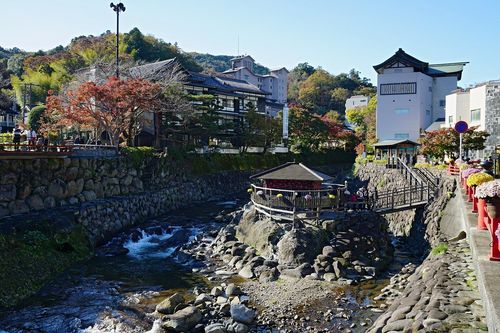
Because the greenhouses are the core of the garden, weather matters less, which is welcome for families. Combined with the annex and a stroll through the Atagawa hot-spring town, it makes a fun stop on a trip along the east coast of Izu. Parking is available for about 150 cars and 10 large buses.
Sources
This article was written from the official, municipal and tourism-association sources above, and checked against them separately from the writing. Editorial policy
Last updated November 19, 2026