ABOUT
About this spot
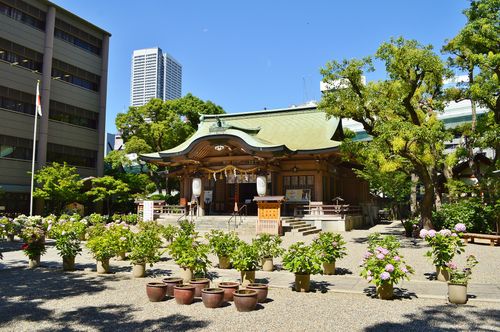
This shrine stands in Bakuro-cho, in Osaka's office district, about a 5-minute walk from Shinsaibashi Station and Hommachi Station. Its main deity is Emperor Nintoku, with Susanoo-no-mikoto enshrined alongside. It was formerly a prefectural shrine, has other names such as Nanba Kamisha and Kami-Nanba Jinja, and its crest is the daki-shobu, a type of iris. In the grounds, surrounded by buildings, irises and a camphor tree bring greenery through the seasons.
Tradition says the shrine was founded when Emperor Hanzei opened the Shibagaki Palace in Matsubara and enshrined his father, Emperor Nintoku. It later moved to Uehommachi (some sources place the move at Hirano instead), and after Toyotomi Hideyoshi built Osaka Castle it was moved to its present site. Because of its place name it was called Kami-Nanba Jinja, and in 1875 it took its present name. After the Summer Siege of Osaka in 1615, nine-tenths of its grounds are said to have been confiscated by the Edo shogunate. It was destroyed in the first Osaka air raid in March 1945, and the main hall and worship hall were rebuilt in July 1974.
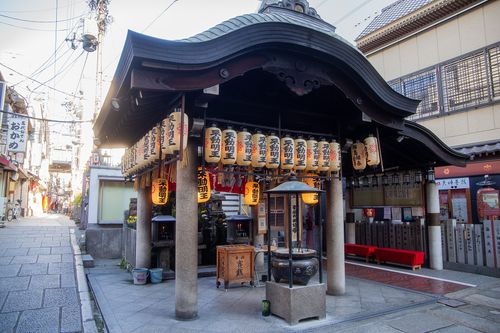
In the Edo period, the Bakuro Inari Shrine in its grounds became known as the Inari of Bakuro-cho and was more famous than the main shrine. It enshrines Ukanomitama and is said to have been deeply revered by the merchants of Semba as a god of business prosperity. In 1811 Uemura Bunrakuken opened a puppet theater hut in the grounds, so the place is also known for its history linked to what later became bunraku. The Juyonbashira Aiden shrine in the grounds enshrines many deities together, including Toyotomi Hideyoshi, Sugawara no Michizane, Kusunoki Masashige and Tokugawa Ieyasu.
Its best-known feature is the Iris Ritual held on June 8. It follows the story of an old woman who offered irises blooming in Horie each year on the fifth day of the fifth month of the old calendar, around the time the shrine was moved here. Irises grown in the grounds are offered before the deity, and two shrine maidens perform the Shobu-gari kagura dance, which includes the motion of cutting irises. The iris is said to have become the shrine's crest because of this story. At the Himuro Festival, the summer festival on July 20 and 21, worshippers are given chipped ice, which is said to keep you from suffering in the summer heat. The annual festival is on October 20.
The sacred camphor tree in the grounds is Osaka City's first designated protected tree and is said to be about 400 years old. It is easy to stop by while walking around Shinsaibashi or Hommachi, and a visit takes about 20 to 30 minutes.
Sources
This article was written from the official, municipal and tourism-association sources above, and checked against them separately from the writing. Editorial policy
Last updated November 5, 2026