SPOT

Genbikei Gorge

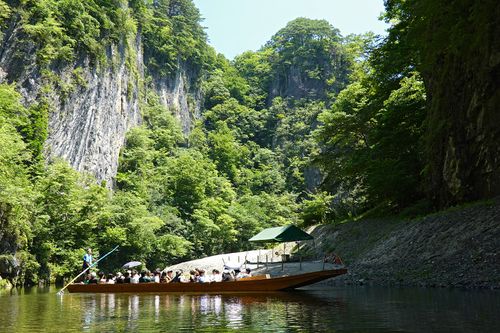
A gorge on the middle reaches of the Iwai River in Ichinoseki, Iwate, where strange rock formations stretch for about 2 km. Its specialty is a dumpling known as the "flying dango."

IwateIchinoseki City

38.94°N 141.05°E

TRAVEL NOTES

Before you visit Genbikei Gorge

When is the best time to visit Genbikei Gorge?
The autumn leaves are usually at their best from mid to late October.Source: Ichinoseki City Tourism Association

Checked against official information on November 14, 2026. Please see the official website for the latest details.

ABOUT

About this spot

Genbikei is a gorge on the middle reaches of the Iwai River in Genbi, Ichinoseki City, Iwate Prefecture. The river, which rises on Mount Kurikoma, has eroded the pumice tuff and other rock, and strange rock formations continue for about two kilometers. The gorge was designated a national Place of Scenic Beauty and Natural Monument in 1927.

The river changes character from place to place. Upstream the current strikes the rocks and throws up spray, while downstream deep, calm pools spread out. On the riverbed, countless potholes have formed along the joints of the welded tuff, and they are regarded as valuable material for geology.

The scenery has long been loved by writers. Date Masamune is said to have praised the place as a scenic spot on a par with Matsushima, and the site of a teahouse linked to him, the Rinsentei ruins, remains. Sugae Masumi visited in the Edo period and left poems, and many literary figures including Koda Rohan wrote travel accounts. In 1877 Prince Kitashirakawa viewed the gorge from a bridge during Emperor Meiji's tour of the Tohoku region, and the bridge came to be called Goranba Bridge.

The local specialty is Kakko Dango, known as the "flying dumplings." The teahouse Kakkoya across the river, which opened in 1878, devised a way to sell dumplings to visitors on the opposite bank. You put your payment in a bamboo basket on the rocks and strike a board with the mallet provided; the basket is pulled up to the teahouse and returns carrying tea, dumplings and your change. The line is now a wire rope. The dumplings come in three kinds, sweet bean, sesame and mitarashi, and there are five on each skewer because the area was once called Itsukushi Village, "five skewers." The name Kakko, "cuckoo," comes from the founder, a man named Chiba, who was good at imitating the cuckoo's call. A story also survives that when Prince Kan'in Kotohito and his wife visited in 1937, dumpling-making was demonstrated for them.

Nearby are Chojataki Bridge, built in 1939 and described as a bamboo-reinforced concrete bridge (a Registered Tangible Cultural Property), the Michi-no-Eki Genbikei roadside station, the Ichinoseki City Museum and Takkoku-no-Iwaya. It is an easy place to stroll, but conditions after heavy rain and the teahouse's operation may change, so please check the latest information before you visit. The scenery changes with the seasons: cherry blossoms in spring, fresh green in summer, autumn leaves, and snow on the rocks in winter.

Sources

  1. ja.wikipedia.org
  2. ja.wikipedia.org
  3. gltjp.com

This article was written from the official, municipal and tourism-association sources above, and checked against them separately from the writing. Editorial policy

Last updated November 12, 2026
Share this spot

NEARBY

Nearby recommendations

More places worth visiting in the area.

Hiraizumi Town, Iwate

Takkoku-no-Iwaya Bishamon-do Temple

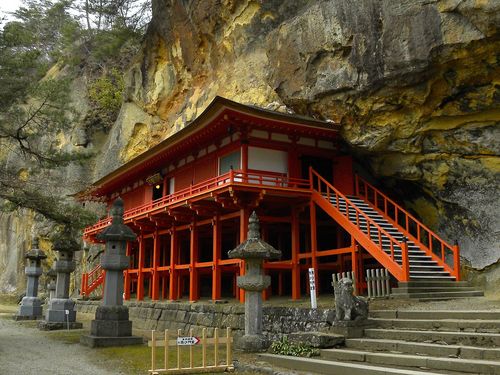
This Bishamon-do hall is built into a rock cave in a cliff face in Hiraizumi, Iwate. A large Buddha is carved into the upper part of the cliff, and the site was designated a National Historic Site in 2005.

Hiraizumi Town, Iwate

Motsuji Temple

Motsuji is part of the World Heritage site "Hiraizumi." Its Pure Land Garden, created by the second and third generations of the Fujiwara clan, is a nationally designated Special Place of Scenic Beauty and Special Historic Site that carries the aesthetic sense of the Heian period. Why not stroll the vast garden centered on Oizumi ga Ike Pond and imagine the ideal paradise of the past?

Hiraizumi, Iwate

Kanjizai-o-in Ruins

The Kanjizai-o-in Ruins in Hiraizumi, Iwate, are the remains of a late Heian temple and Pure Land garden. A Special Historic Site, they are part of the Hiraizumi World Heritage listing.

Hiraizumi, Iwate

Chusonji Temple

The head temple of the Tendai sect in the Tohoku region and a symbol of the World Heritage Site "Hiraizumi." More than 3,000 cultural properties, including the National Treasure Konjikido (Golden Hall), convey the glory of the Fujiwara clan to this day.

Ichinoseki City, Iwate

Geibikei Gorge

A gorge along the Satetsu River in Ichinoseki, Iwate, where limestone cliffs run for about 2 km. One of Japan's 100 Scenic Spots, it offers boat rides with the boatman singing the Geibi Oiwake folk song.

Oshu City, Iwate

Esashi Fujiwara no Sato

Esashi Fujiwara no Sato, in Oshu, Iwate, is a theme park recreating the Heian period. It preserves the large open set of an NHK historical drama and has over 120 recreated Heian-period buildings.

AREA

Explore the area

More places in the same city, the same category, and close by.

NEARBY

Festivals and breweries in Ichinoseki City

Festivals and brewery visits on our sister sites, in the same city as this spot.

MORE TO EXPLORE

More from Iwate

Discover more of the same region on our sister sites.