SPOT

Akiyoshido Cave

A limestone cave beneath the Akiyoshidai plateau in Mine, Yamaguchi, designated a Special Natural Monument. A series of named sights, such as the Hundred Plates and the Golden Pillar, line the cave.

YamaguchiMine City

34.23°N 131.30°E

TRAVEL NOTES

Before you visit Akiyoshido Cave

How long does a visit to Akiyoshido Cave take?
The estimated sightseeing time is about 60 minutes, or about 90 minutes for a round trip.Source: Mine City Tourism Association
When is the best time to visit Akiyoshido Cave?
The cave stays at a constant 17°C all year, cool in summer and warm in winter, so it can be comfortably visited in any season.Source: Mine City Tourism Association

Checked against official information on November 14, 2026. Please see the official website for the latest details.

ABOUT

About this spot

Akiyoshido is a limestone cave that stretches beneath the Akiyoshidai plateau in Mine City, Yamaguchi Prefecture. It lies within Akiyoshidai Quasi-National Park and is designated a Special Natural Monument. The limestone plateau above ground, Akiyoshidai, and the cave beneath it, Akiyoshido, form a combination known as one of Japan's leading karst landscapes. The tourist route is about one kilometer long, and as one of the largest show caves in Japan it has welcomed many visitors.

An underground river flows through the cave. The inner Kotogafuchi pool is where Japan's first cave-diving exploration took place, in 1962. Near the entrance the temperature changes with the seasons, while deeper inside it stays nearly constant all year.

In terms of history, local tradition says that in the mid-14th century the Zen priest Daido Juen performed a rain-making ritual inside the cave. Development as a show cave began in 1909 under Umehara Bunjiro, with an opening ceremony. In 1926, after a visit by the Crown Prince (the future Emperor Showa), the cave was renamed from "Takiana" to its present name, Akiyoshido. It was designated a national natural monument in 1922 and raised to a Special Natural Monument in 1952. In 2005 the groundwater system of Akiyoshidai was registered as a Ramsar wetland together with Taishodo and Kagekiyodo.

The highlights are the many named features strung along the route: Hyakumaizara, a series of terraced flowstone basins like rice paddies; Ogon-bashira, the "golden pillar," a huge column-like flowstone regarded as the symbol of the cave; Kasazukushi, where stalactites hang from the ceiling like umbrellas; and others such as Gankutsuo and Aoten-i. The scene changes with every step. The large hall called Senjojiki is among the largest cave spaces in Japan. Midway through the cave is an elevator exit that takes you up to the Karst Observatory on Akiyoshidai; the elevator began operating in 1956.

There are several entrances: the main entrance, the Kurotani entrance and the elevator entrance. Besides Akiyoshido there are other caves, Taishodo and Kagekiyodo, and a combined ticket for visiting all three is sold. After the cave, looking out over the plateau from the Karst Observatory lets you enjoy the karst scenery from both underground and above. Please check the official website for the latest information on the areas open to visitors before you go.

Sources

  1. ja.wikipedia.org
  2. karusuto.com

This article was written from the official, municipal and tourism-association sources above, and checked against them separately from the writing. Editorial policy

Last updated November 12, 2026
Share this spot

NEARBY

Nearby recommendations

More places worth visiting in the area.

Mine City, Yamaguchi

Beppu Benten Pond

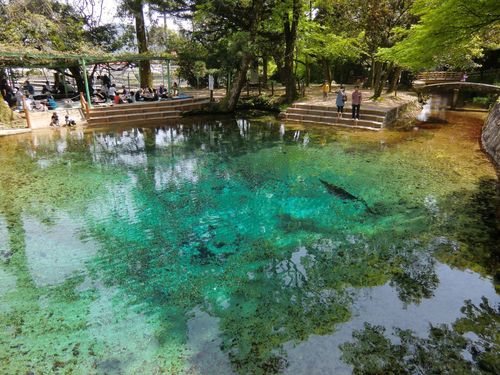
A spring-fed pond in Akiyoshidai, Mine, Yamaguchi, chosen in 1985 as one of Japan's 100 Exquisite and Well-Conserved Waters. Its water is clear to the bottom and is said to look blue to emerald green in the sunlight.

Mine City, Yamaguchi

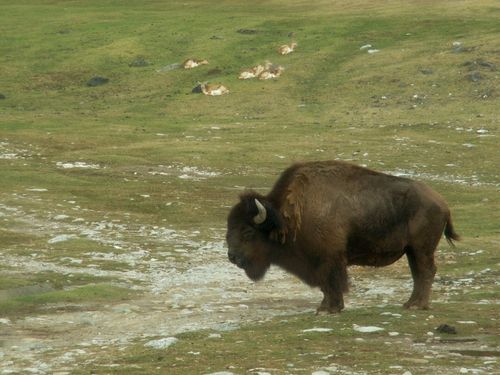
Akiyoshidai Safari Land

An experience-based safari park where you can observe wild animals such as lions and tigers up close amid the vast nature of Akiyoshidai. Besides viewing from your vehicle, you can enjoy petting animals and an amusement park.

Yamaguchi City, Yamaguchi

Yuda Onsen

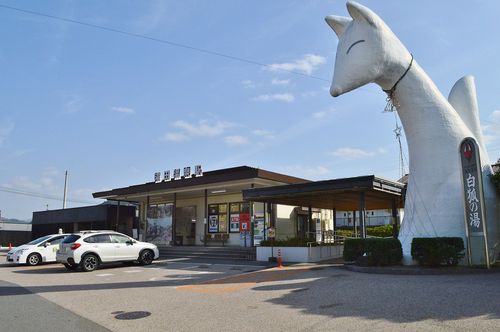
Yuda Onsen is a hot spring town in the center of Yamaguchi, Yamaguchi, with alkaline simple hot spring water. Long loved as a "beauty bath," it has foot baths scattered around town.

Yamaguchi City, Yamaguchi

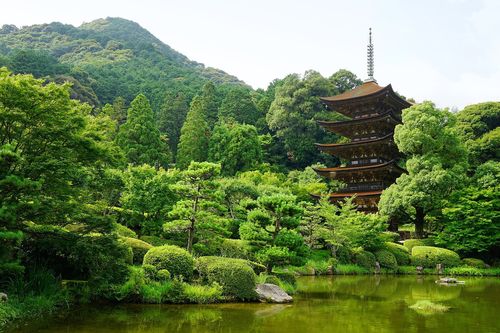
Rurikoji Temple

Rurikoji Temple stands in Kozan Park in Yamaguchi and is known for its National Treasure five-story pagoda, a legacy of Muromachi-period Ouchi culture. The 31.2 m pagoda is in the wayo style with Zen-style elements.

Yamaguchi City, Yamaguchi

Yamaguchi Xavier Memorial Church

Yamaguchi Xavier Memorial Church is a Catholic church on Kameyama in Yamaguchi, marked by two tall towers. Built to commemorate Francis Xavier’s mission here, the present church was completed in 1998.

Yamaguchi City, Yamaguchi

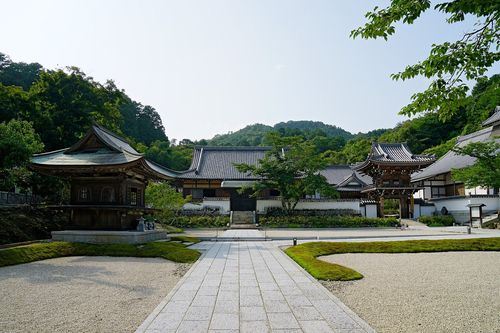
Joei-ji Temple (Sesshu Garden)

A Japanese garden said to have been created by the master painter Sesshu in the Muromachi period. A nationally designated Historic Site and Place of Scenic Beauty, charming for its stonework that embodies the world of ink painting and its seasonal beauty.

AREA

Explore the area

More places in the same city, the same category, and close by.

MORE TO EXPLORE

More from Yamaguchi

Discover more of the same region on our sister sites.