ABOUT
About this spot
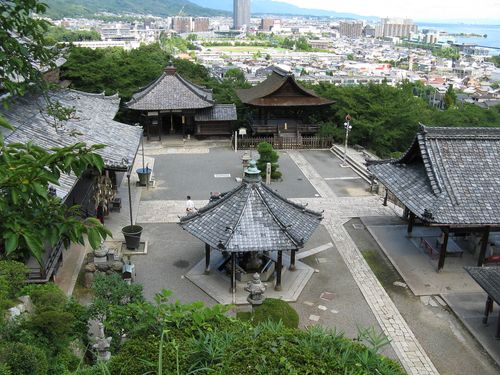
Omi Jingu stands at the foot of Mt. Usa in Otsu, Shiga Prefecture. It enshrines Emperor Tenji, who moved the capital from Asuka to Omi Otsu no Miya in 667, and the area around the shrine is associated with that palace. A former Kanpei Taisha and a Chokusai-sha, it is a shrine of high standing. It is revered as the "ancestral god of time," a god of good fortune and guidance, and a protector of culture, learning and industry.
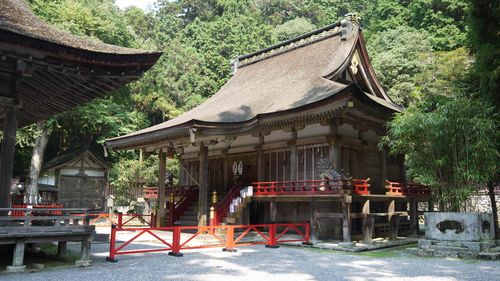
The shrine was founded in the Showa era. In 1908, on the 10th anniversary of Otsu City, a movement arose to enshrine Emperor Tenji at the site of Otsu no Miya, and in 1938 an imperial decree of Emperor Showa decided on its founding as a Kanpei Taisha. The deity was enshrined in 1940. The buildings are in a style called Omi-zukuri (Showa-zukuri), known as a representative of modern shrine architecture, and the main hall, inner and outer worship halls, the north gate and the kagura hall are registered Tangible Cultural Properties.
What characterizes this shrine is clocks. Emperor Tenji is said to have set up Japan's first water clock (rokoku) to announce the time, and so he is enshrined as a god of time. In the grounds are a reconstructed model of the rokoku, sundials, and an ancient fire clock, dedicated by clock-related people from various places. In 1963 Japan's first clock museum opened, which was later renovated into the Clock Museum and Treasure Hall. Each year on Time Commemoration Day in June, the Rokoku Festival is held. It is also unusual that a vocational school that trains clock technicians is located on the grounds.
The other face of the shrine is karuta. Because the opening poem of the Ogura Hyakunin Isshu is by Emperor Tenji, it is known as a holy place of competitive karuta. Every January the championship matches for the Meijin and Queen titles are held, and competitive karuta tournaments are held frequently. It has also become widely known as the setting of the competitive karuta manga Chihayafuru. The grounds have poem and haiku monuments scattered about, including Emperor Tenji's poem, a haiku monument for Matsuo Basho, Man'yoshu poem monuments for Kakinomoto no Hitomaro and Takechi no Kurohito, and a Chinese-poem monument for Emperor Kobun (Prince Otomo), so you can also enjoy a literary walk.
Among annual events are the main festival and Omi Festival every April, the yabusame horseback archery ritual in June, and the Enshrinement Anniversary Festival in November.
It is within walking distance of Omijingu-mae Station on the Keihan Ishiyama-Sakamoto Line, so you can visit while strolling around Lake Biwa and the city of Otsu. Taking your time for worship, the treasure hall and the poem monuments is recommended. Please check the official website for the latest information on reception and events before you visit.
Sources
This article was written from the official, municipal and tourism-association sources above, and checked against them separately from the writing. Editorial policy
Last updated October 29, 2026