ABOUT
About this spot
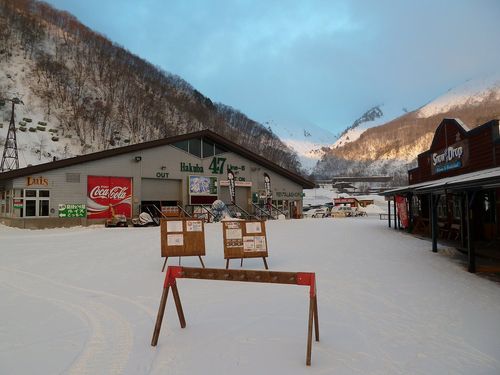
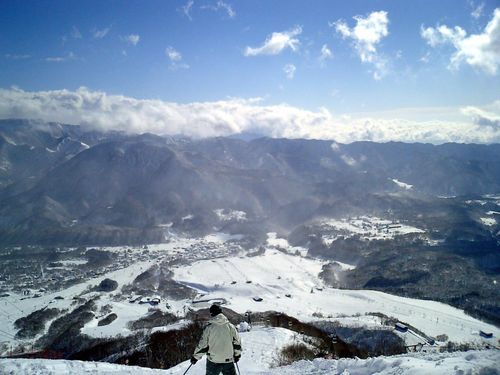
Hakuba Happo-one Ski Resort spreads over the east-facing slopes of Mount Karamatsu in Hakuba Village, Nagano Prefecture. The vertical drop is 1,071 m, the highest point is 1,831 m above sea level, the longest run is 8,000 m and the maximum gradient is 35 degrees. It has 13 courses, an area of about 200 ha and 27 lifts, and is regarded as one of the largest single ski areas in Japan. Its history is long: ski huts opened on the Sakihana slope in 1929 and on the Kurobishi slope in 1931.
At the 1998 Nagano Olympics the alpine downhill events were held here. The men's downhill ran from the top at 1,765 m to the finish at 840 m, 3,270 m long with a drop of 925 m. The women's run went from 1,680 m at the top of the Kurobishi slope to 899 m on the Sakihana slope, 2,654 m long with a drop of 781 m, and it is still used as a venue for the Japan Para alpine ski races. The men's super-G started from 1,490 m on the middle of the Usagidaira slope.
Most of the courses are for intermediate and advanced skiers. The Riesen slalom course is regarded as one of Japan's leading downhill courses, and the snow is said to be well groomed in the morning. The mogul slopes of Usagidaira and Kurobishi are famous, and you should be careful because there is no bypass above Usagidaira. The Sakihana slope suits beginners and families. The Happo-one Ski School is a well-regarded school whose instructors include national demonstrators.
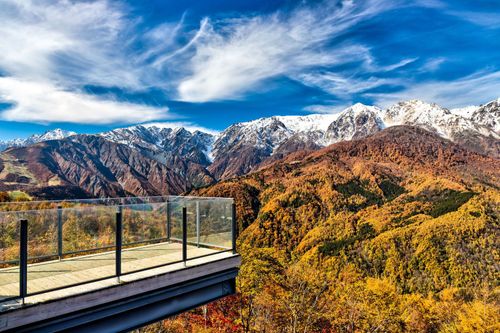
Even without snow the mountain opens up in a different guise. In summer the gondola and lifts serve as the access route for climbing Mount Karamatsu. The gondola base station is at 770 m, Kurobishidaira at 1,680 m and Happo Pond at 2,060 m. Happo-ike Sanso station, reached by changing from the gondola to lifts, is at 1,830 m, and from there it is about an hour one way to Happo Pond. The peaks of the Hakuba range are reflected in the pond, and the autumn colors are said to peak from late September at Happo Pond and in early October at Kamaike Marsh. Paragliding and other flying sports are also popular.
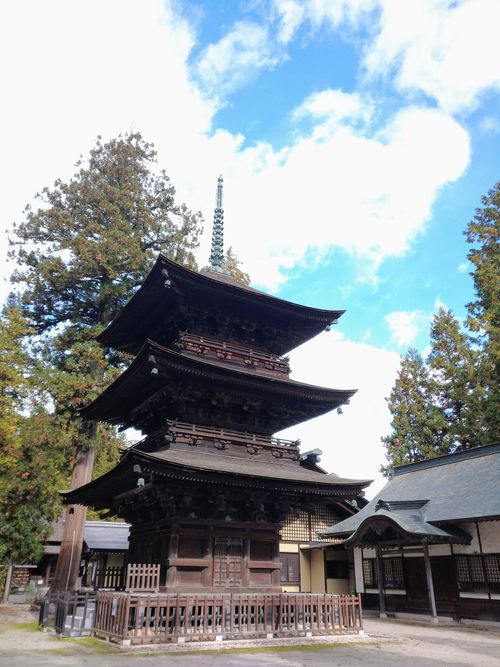
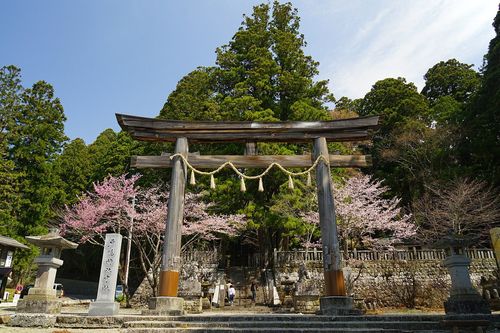
In Hakuba Village, Hosono Suwa Shrine has a cedar estimated to be over 1,000 years old, treated as a natural monument of the village. Its annual festival, also called the Yukake Festival, has men carrying a stone mikoshi containing serpentine rock while hot spring water is poured over them. The area has also been the setting for films such as Ginrei no Ohja (1960) and Gaku (2011).
Sources
This article was written from the official, municipal and tourism-association sources above, and checked against them separately from the writing. Editorial policy
Last updated November 12, 2026