ABOUT
About this spot
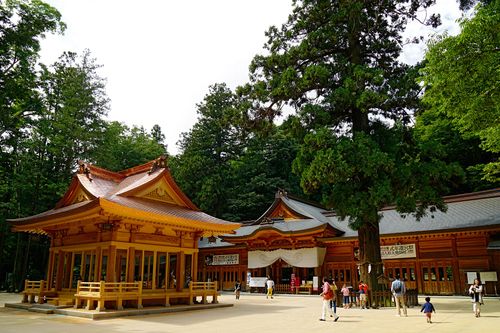
In the center of Omachi, Nagano Prefecture, within walking distance of Kita-Omachi Station on the JR Oito Line, stands Wakaichi Oji Shrine, long worshipped as the guardian shrine of the town. Its precinct holds a main hall designated a national Important Cultural Property and a three-story pagoda that is a Nagano Prefectural Treasure, preserving the look of the age of Shinto-Buddhist syncretism.
According to the shrine's tradition, it began in the reign of Emperor Suinin, when Nihin-o, who ruled this area, built a shrine and enshrined Izanami-no-mikoto. In 849 the Nishina clan is said to have built the shrine buildings. In the Kamakura period Nishina Morotoo visited Kumano in Kii Province, invited Wakaichi Oji from Kumano Nachi Taisha, and made it the guardian of the Nishina estate. It came to be called Nyakuichi-no-miya, and Morotoo is said to have served Retired Emperor Go-Toba as a member of the Saimen no Bushi guard. In the age of syncretism it was called Wakaichi Oji Gongen, it was protected by the Matsumoto domain in the Edo period, and it became a shrine after the separation of Shinto and Buddhism in the Meiji era.
The main hall was built in 1556 by Nishina Moriyasu, lord of Mori Castle on the shore of Lake Kizaki, and is a single-bay Kasuga-zukuri building with hinoki bark roofing and corner rafters. The three-story pagoda was built in 1711 through the fundraising of the monk Mokujiki Sankyo; it is a three-bay, three-sided structure with a shingled roof, and seated statues of the Five Wisdom Buddhas are enshrined below. The brackets on the first story carry carvings of the twelve zodiac animals with human bodies and animal faces, which reward a close look. The worship hall was rebuilt in 1975 using parts of former buildings of Ise Shrine.
The precinct has one more building, the Kannon Hall, built in 1706. It is the first stop on the Nishina 33 Kannon pilgrimage and has been revered as a Kannon that protects against fire. At the time of the Meiji-era separation of Shinto and Buddhism, the pagoda was renamed the "Monomi no Korou" (watchtower) and the Kannon Hall a kagura stage, and it is also said that an earthen embankment was raised between the buildings to explain that the shrine and the temple were separate. As a result, the layout of the old syncretic shrine remains. The forest surrounding the shrine is a Nagano Prefectural Natural Monument.
No account of this shrine is complete without its festival. The annual festival is on July 17, and on the fourth Sunday of July a yabusame ritual and stage events are held to celebrate it. The Omachi yabusame is an intangible folk cultural property of Nagano Prefecture, and the archers are children of about six to nine. Dressed in hunting robes and jinbaori coats, they ride horses, and locally the archer is called a "bobo." Their procession is likened to a daimyo procession. The yabusame is said to have begun in 1221, when Nishina Morotoo performed it to pray for victory under an imperial order.
A visit is mostly a stroll, viewing the main hall and pagoda from outside and walking in the shrine forest. There is parking for about 20 cars, so it is easy to stop by car as well.
Sources
This article was written from the official, municipal and tourism-association sources above, and checked against them separately from the writing. Editorial policy
Last updated November 16, 2026