ABOUT
About this spot
Lake Yamanaka is a freshwater lake in Yamanakako Village, Minamitsuru District, Yamanashi Prefecture, and one of the Fuji Five Lakes. It lies farthest east of the five. The surface elevation is 980.5 m and the maximum depth is 13.3 m, making it the shallowest of the Fuji Five Lakes. It is part of Fuji-Hakone-Izu National Park and, on June 22, 2013, was inscribed as a component of the World Cultural Heritage property "Fujisan, Sacred Place and Source of Artistic Inspiration."
The lake is regarded as a barrier lake formed when lava flows and similar deposits dammed a river. How and when it took its present form, however, is still debated among researchers. It is also the only one of the Five Lakes with a natural outflow river, and the water flowing out becomes the source of the Sagami River. Within Yamanashi Prefecture it is called the Katsura River.
The lake holds creatures that are not found in the others. The Fuji marimo living offshore of the Hirano district was discovered in 1956 during a primary school class, and because the area marks the southern limit of marimo distribution, it is designated a Natural Monument of Yamanashi Prefecture. In the shallow Hirano Bay, carp, dace and pond smelt live, and the pond smelt is said to have been successfully released on a trial basis in 1919. In winter, pond smelt are caught by ice fishing through holes. A large Zumi tree on the sand spit called "Misaki" is a Natural Monument of the village.
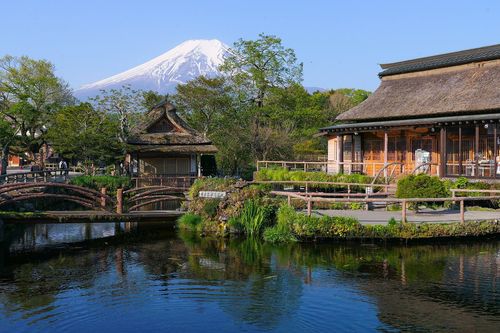
Yamanaka is also famous for views of Mt. Fuji. The Ministry of Land, Infrastructure, Transport and Tourism's "100 Fuji Viewpoints of Kanto" lists nine spots here: Yamanakako Shinsui Park, Panorama-dai, Takasasuyama, Asahigaoka Lakeside Green Park, Mt. Ohira, Hirano, Oike, Yamanakako Hana no Miyako Park and the Yamanakako Kirara exchange plaza. Shinsui Park is a viewpoint close to Mt. Fuji with the mountain rising over the lake. Hirano is known as a place to watch Diamond Fuji, when the sun sets on the summit. Oike is described as a place where swans, the village bird, gather.
To look down on the lake from higher ground on foot, there are Takasasuyama and Mt. Ohira. Takasasuyama passes through coniferous and beech forest and offers a full view of Mt. Fuji and the lake, and it is also described as good for bird-watching. Mt. Ohira also gives views of Mt. Fuji and the lake from its summit and is popular as an easy hiking course. The Tokai Nature Trail runs over Mt. Ohira and Mt. Ishiwari. Panorama-dai lies along the prefectural road from the lake toward Mikuni Pass, and the Southern Alps can reportedly be seen on a clear day.
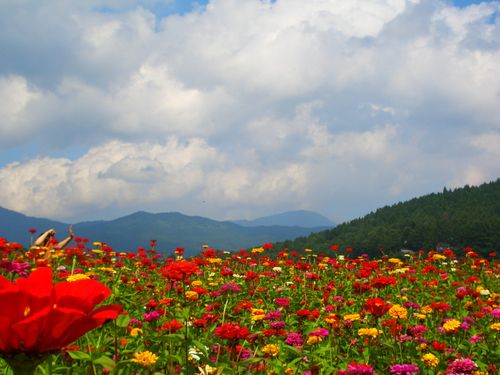
Around the lake stands the Yamanakako Forest of Literature Park, with the Yukio Mishima Literary Museum and the Tokutomi Soho Museum. Scattered around are the Yamanakako Museum of Art, the Teddy Bear World Museum and the village-run day-use hot spring facilities Ishiwari-no-Yu and Benifuji-no-Yu. The Hirano district has many tennis courts and is known as a place for tennis training camps.
A cycling road has been built along the shore, and in spring and summer rental bicycles and boats are popular. Attractions and events change with the season, so please check with Yamanakako Village or the tourist association before you visit.
Sources
This article was written from the official, municipal and tourism-association sources above, and checked against them separately from the writing. Editorial policy
Last updated November 12, 2026