ABOUT
About this spot
Kotoku-in is a Pure Land Buddhist temple in Hase, Kamakura, Kanagawa Prefecture. Its main object of worship, a bronze seated Amida Buddha known as the Kamakura Daibutsu, was designated a National Treasure in 1958. The statue is about 11.39 meters tall, about 13.35 meters including the pedestal, and weighs about 121 tons, a figure measured during repair and earthquake-proofing work from 1959 to 1961.
Tracing its history, construction of the Great Buddha hall is said to have begun around 1238 in the Kamakura period, and the Azuma Kagami records that casting of the bronze Buddha began in 1252. Tradition holds that funds raised by the monk Joko were used for it, but the person who conceived the project, how the funds were gathered and details of its making are not settled. The Buddha was originally enshrined inside a hall. Sources such as the Taiheiki record that the hall was damaged in 1334, 1369 and 1498, and today the Buddha sits in the open air without a building. Around 1712, in the Edo period, the name Kotoku-in, taken from the Buddhist name of Nojima Shinzaemon, became the temple's official name. Repair and earthquake-strengthening work was carried out from 1959 to 1961, and in 2004 the whole precinct was designated a national historic site as the Site of the Kamakura Great Buddha Hall.
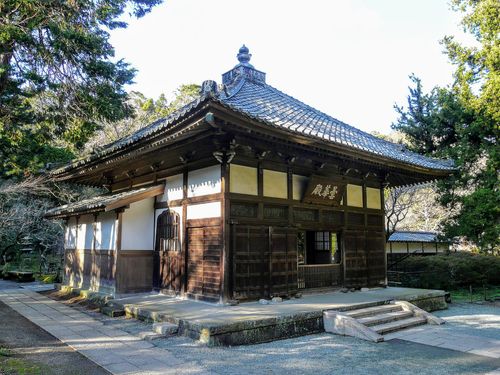
The main sight is the Buddha itself. It has been confirmed that the body was cast in seven tiers and the head in five tiers at the front and six at the back. The interior is sometimes open to visitors, who can step inside and see it up close (whether it is open depends on how the temple is operated, so check the official website). In the precinct are the Niomon gate, said to have been moved from elsewhere in the early eighteenth century, and a stone monument inscribed with a poem by Yosano Akiko. The Kangetsudo hall, a building that originally stood in a Korean royal palace, began to be dismantled in 2024, and there are plans to build a hall on the site.
Looking up at the Buddha under a blue sky is something only an outdoor Buddha can offer. Eating, drinking and bringing in food are prohibited in the precinct, which is entirely non-smoking, and visitors are asked not to fly drones without permission. Inside the Buddha, the use of selfie sticks is also discouraged.
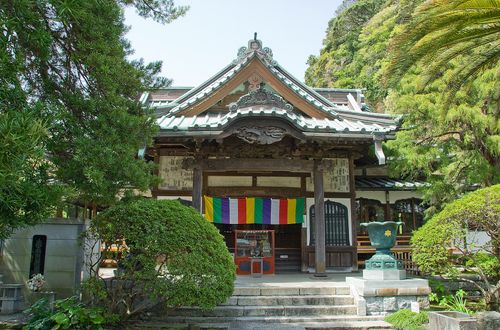
It is a walk of about 7 to 9 minutes from Hase Station on the Enoden. The nearby Hase-dera temple houses an eleven-faced Kannon statue about 9.2 meters tall. Hase-dera is the fourth temple of the Bando 33 Kannon pilgrimage and is also known for its hydrangeas. It is an area where you can visit both the Great Buddha and Kannon.
Sources
This article was written from the official, municipal and tourism-association sources above, and checked against them separately from the writing. Editorial policy
Last updated November 12, 2026