ABOUT
About this spot
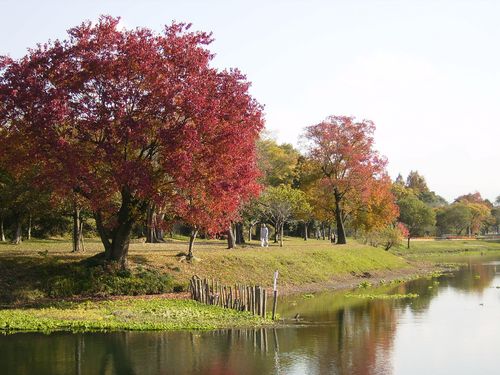
Suizenji Jojuen is a daimyo garden in Chuo Ward, Kumamoto City, covering about 73,000 square metres. It was made in the Edo period for the Hosokawa family, lords of the Higo Kumamoto domain. It is a strolling garden built around a pond rich in spring water, and the official website presents it as a strolling garden that Hosokawa Tadatoshi made in the early Edo period.
It began when Hosokawa Tadatoshi built a villa here in the early Edo period. Sources give the year as 1636 or 1632, so no year is stated here. Later, from 1670 to 1671, Hosokawa Tsunatoshi carried out major garden work that gave it its present form. The name "Jojuen" is said to come from a line of "Guiqulai Xi Ci" by the Chinese poet Tao Yuanming. In the Genroku era many pavilions were built in the garden, and visitors enjoyed choosing the "Ten Views of Jojuen". Edo-period maps show a riding ground completed in 1776 and a tea house called Suigetsutei (the "Moon-Intoxicated Pavilion"). The name of the alga suizenji-nori comes from its discovery in this garden's pond.
The garden's highlight is its scenery by analogy. The hill and the flat ground beside it are said to represent Mount Fuji and the scenic spots of the Tokaido.
What speaks most of history here is the Kokin Denju no Ma. Kokin denju is the tradition of passing on orally the difficult interpretation of the "Kokin Wakashu" anthology, and Hosokawa Fujitaka, grandfather of the first lord of the Kumamoto domain, taught it to Prince Hachijo-no-miya Toshihito. This building originally stood in Kyoto and was moved to Suizenji Jojuen in 1912. It is regarded as a replacement for a tea house burned in the Seinan War of 1877, and it has been open to the public since 1955. Its highlights include sliding-door paintings of the paulownia crest that became an imperial emblem, a fire-bell window that frames the pond like an ink landscape, and the stump of the Kokin Denju pine, linked to Fujitaka.
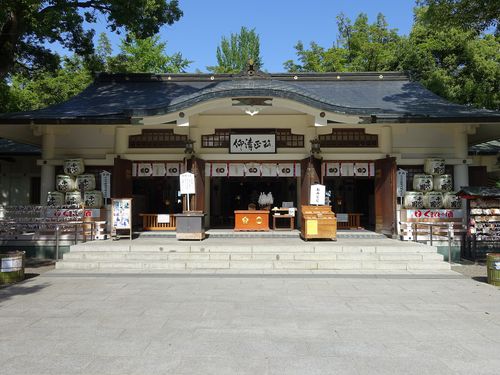
In the Seinan War the tea house burned and the garden was damaged. In 1878 Izumi Shrine was founded in the garden, and the official website says it enshrines the lords of the domain, beginning with its first lord, Hosokawa Tadatoshi. A noh theatre stands in the garden, and there is a yabusame archery course. In 1929 it was designated a national Place of Scenic Beauty and Historic Site. The garden's opening and events can change, so please check the official website before you visit.
Sources
This article was written from the official, municipal and tourism-association sources above, and checked against them separately from the writing. Editorial policy
Last updated November 12, 2026