ABOUT
About this spot
Nagatoro Gorge lies in the town of Nagatoro in Saitama's Chichibu region, where the Arakawa River cuts through the mountains. The word "toro" refers to a deep, calm pool where water slows between rocks, and the blue, quiet stretches of the Arakawa are said to have given the place its name. Since 1924 it has been a nationally designated Place of Scenic Beauty and Natural Monument, and it is part of the Saitama Prefectural Nagatoro Tamayodo Natural Park.
The heart of the gorge is Iwadatami, where uplifted crystalline schist spreads along the Arakawa River for about 500 meters like tatami mats laid side by side. Across the river rise the sheer cliffs of Chichibu Sekiheki, and you can also see potholes, the round hollows carved by the current. On the riverbank below the Prefectural Museum of Natural History is Toraiwa, where bands of two kinds of schist form a striped pattern reminiscent of tiger skin. At Kikusuiiwa, a rock of hematite-bearing quartz schist, you can see a recumbent fold, where the rock has been bent over on itself.
Because metamorphic rock is exposed at the surface, Nagatoro has long been called a "window to the Earth." The German geologist Naumann surveyed it in 1878, and the area is often described as the birthplace of Japanese geology. Walking along and comparing the rocks one by one gives a sense of the long time they record.
To enjoy the river itself, there are traditional boat rides running about 6 km from Oyabana Bridge to Takasago Bridge, and canoeing, rafting and camping are popular too. Looking up at the rock terraces and cliffs from the water feels very different from seeing them on foot. Operations can change with the weather and water conditions, so check with the tourist association before you go.
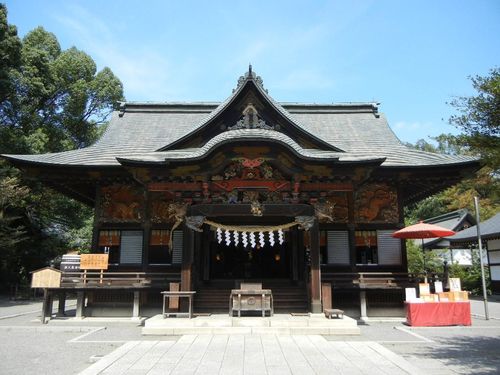
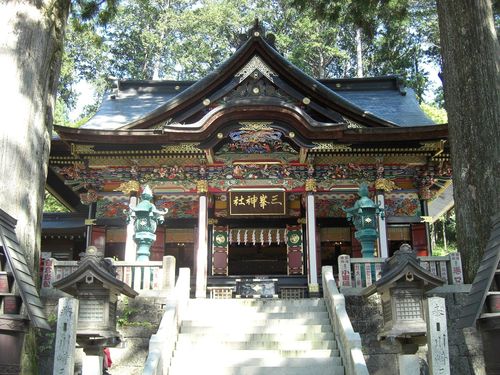
On the cultural side, "Yuku Haru" (Departing Spring), a pair of folding screens painted in 1916 by the Nihonga artist Kawai Gyokudo, is known as a work associated with the scenery of Nagatoro and is designated an Important Cultural Property. The haiku poet Takahama Kyoshi also visited Nagatoro, and a monument inscribed with his verse stands here. A short distance away is Hodosan Shrine, where legend says Yamato Takeru, caught in a mountain fire, was guided to safety by a dog (a wolf) regarded as a messenger of the deity; the shrine is also known as a protector against fire.
From Nagatoro Station on the Chichibu Railway, Iwadatami is within walking distance, so the gorge suits a day trip by train. In autumn the area draws visitors who come for the foliage, and the riverside shows a different face with each season.
Sources
This article was written from the official, municipal and tourism-association sources above, and checked against them separately from the writing. Editorial policy
Last updated November 12, 2026