ABOUT
About this spot
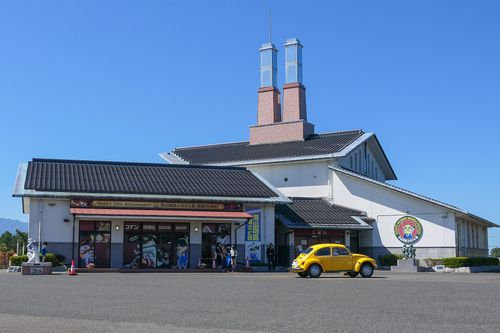
The Tottori Nijisseiki Pear Museum is a museum themed on pears, located in Kurayoshi Park Square in Kurayoshi, Tottori Prefecture. Its official name is the Tottori Prefectural Nijisseiki Pear Museum, and it is said to be the only museum in Japan with pears as its theme. It opened in April 2001, and its nickname "Nashikko-kan" was set in December 2009. From April 1, 2024, Ace Pack Co., Ltd., which has a factory in Kurayoshi, acquired the naming rights, and the nickname became "Ace Pack Nashikko-kan." The operator is Tottori Prefecture, and management is carried out by a designated manager.
Inside are an introductory exhibit, a theater, a materials exhibition room, a special exhibition room and a fruit parlor. As the centerpiece, a huge Nijisseiki pear tree with widely spreading branches stands as the symbol tree, and there are also exhibits introducing pear cultivation and the history of the Nijisseiki pear. A "Wonder Garden" lets you feel as if you had shrunk and were standing in a pear orchard.
You can learn by eating at the "Pear Kitchen Gallery," where you can compare three kinds of pears, a popular spot said to be enjoyable all year round. The fruit parlor offers Nijisseiki pear soft-serve ice cream and mini parfaits topped with pear, and there is also a souvenir corner with pear products.
Why pears in Tottori? The background is the history of the Nijisseiki pear. It was discovered in 1888 in Ohashi Village, Chiba Prefecture (now Matsudo), by Matsudo Kakunosuke, who was 13 years old at the time. He transplanted a seedling growing on the garbage heap of a relative's house and raised it, and at first named it "Shintaihaku." In 1898, when it bore fruit, Watase Torajiro named it "Nijisseiki" (Twentieth Century), expecting it to become the variety that would represent the new century. In 1904 Kitawaki Eiji introduced it to Tottori Prefecture, where it became a local specialty. The pear blossom is also the prefectural flower of Tottori.
The Nijisseiki is an "ao-nashi" (green pear) type with a yellow-green skin, and is known for a good balance of sweetness and acidity, a clean taste and plenty of juice. On the other hand, it cannot pollinate itself and is very vulnerable to black spot disease, and improved varieties have been developed to overcome this. Because its flesh is excellent, it was widely used as a breeding parent, and most pears on the market today are descendants of the Nijisseiki. It originated in Matsudo, Chiba, but it is not grown much there now, and Tottori Prefecture is known as its representative production area.
Around the museum you can also walk to the Kurayoshi Shirakabe Dozogun (white-walled storehouse district), Utsubuki Park and the Tottori Prefectural Museum of Art, all in the same city. The location makes it easy to see the pear exhibits, try the tasting, and then set out to stroll around Kurayoshi.
Exhibits and activities can change with the season and the year, so it is wise to check the official guide for opening status and exhibits before your visit.
Sources
This article was written from the official, municipal and tourism-association sources above, and checked against them separately from the writing. Editorial policy
Last updated November 12, 2026